Oil markers on canvas
(unstretched)
35 × 75 × 0.1 in
2005
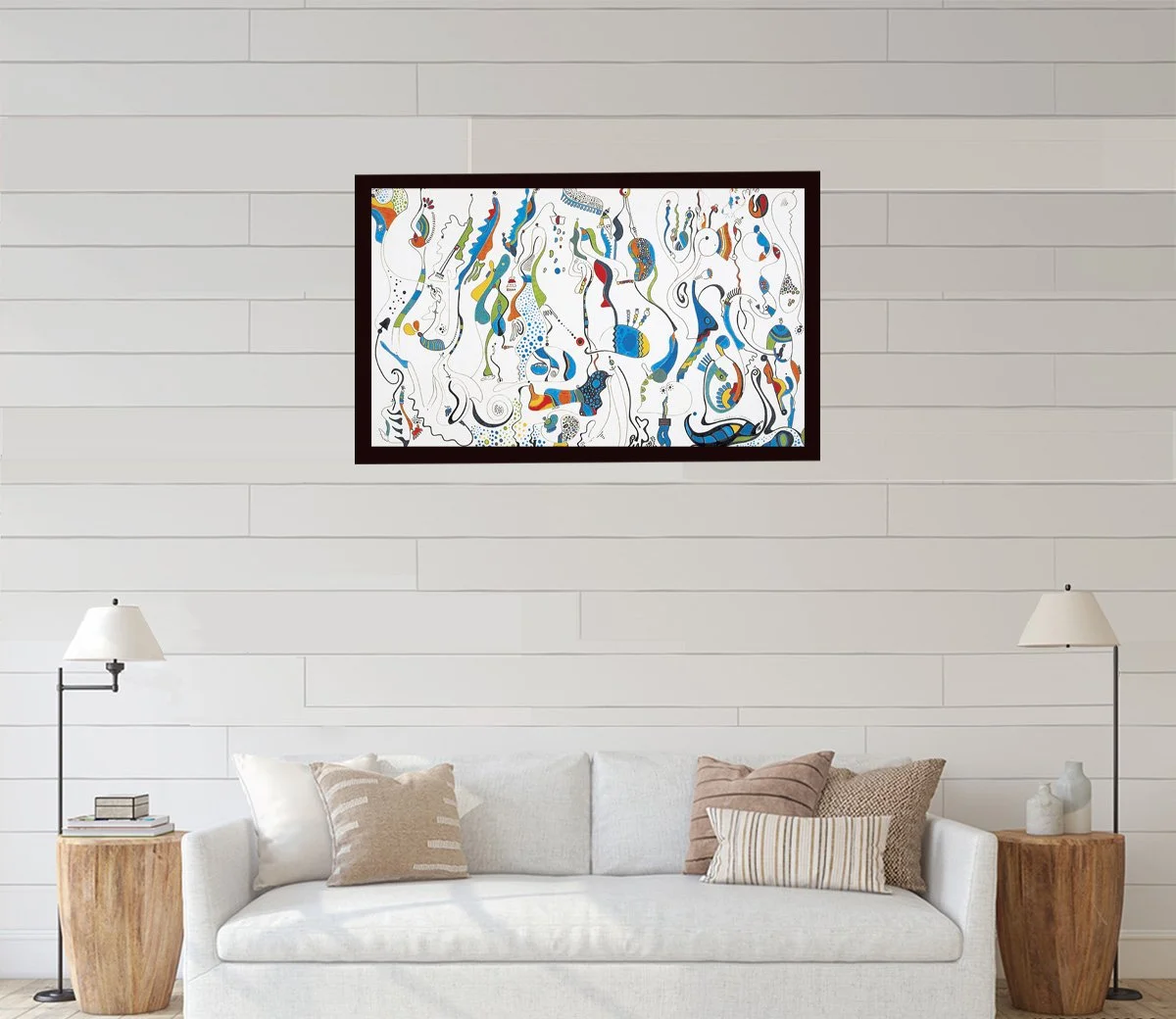
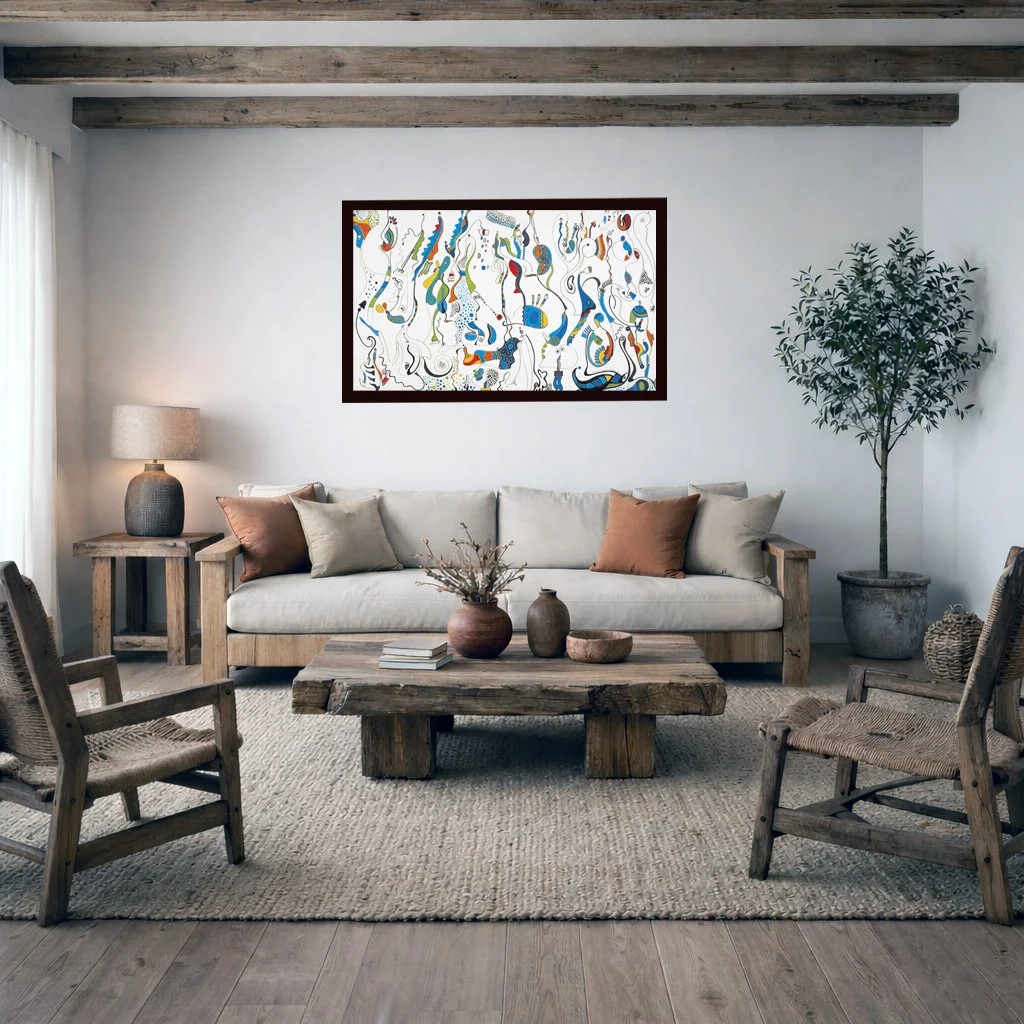
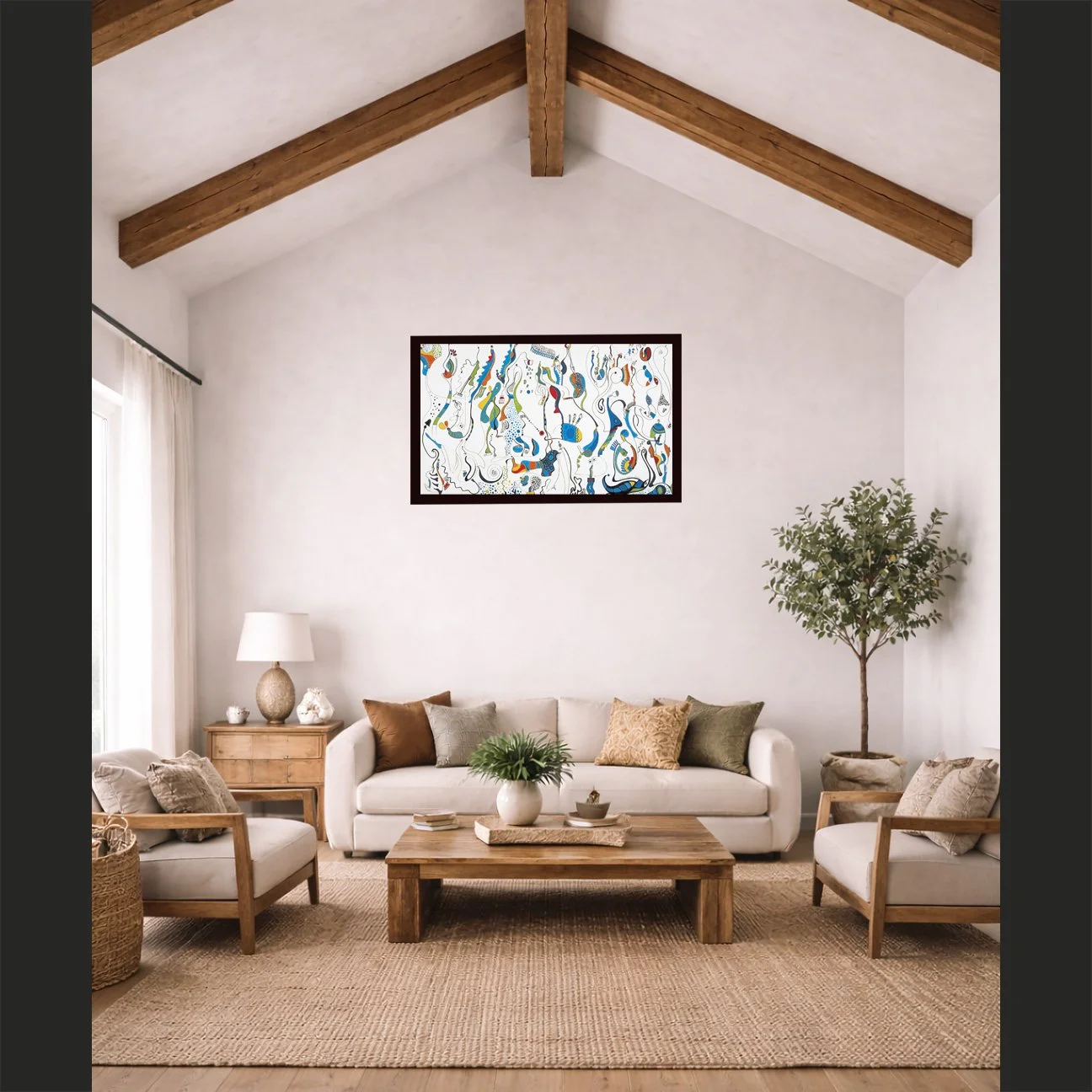
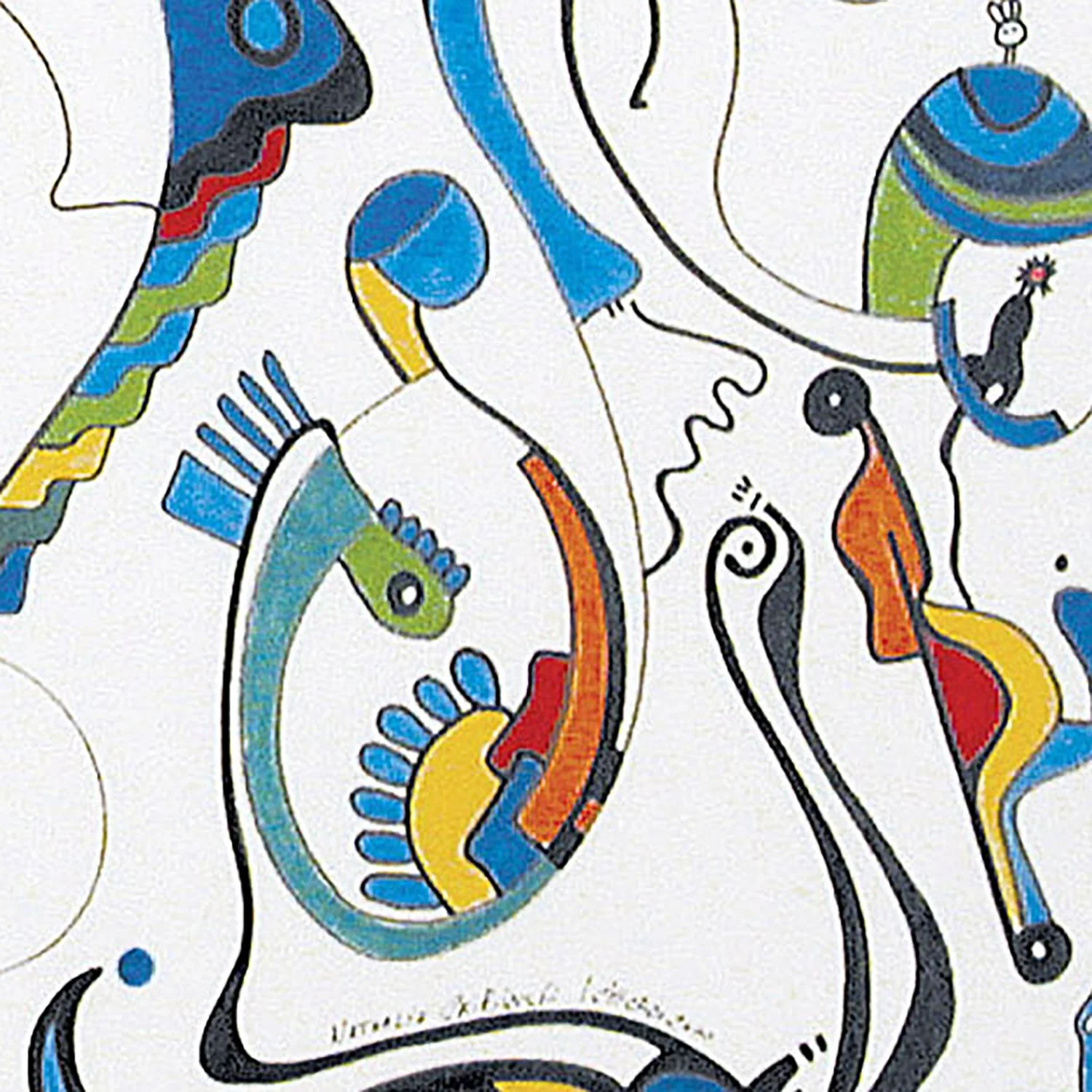
Carnival of the Fool is composed of interconnected white forms outlined in black and accented with blue, green, yellow, orange, and red. The composition contains numerous profiles, abstract figures, birds, masks, and symbolic motifs distributed across the surface. The imagery is organized through a network of flowing lines that connect individual elements while allowing each form to maintain its visual identity.
The painting combines large open areas with clusters of concentrated detail. Repeated profiles, circular motifs, patterned shapes, and elongated forms create a rhythm that guides the eye through the composition. Color is used selectively to distinguish forms and establish relationships between different parts of the image, while the white ground remains an important structural component.
The title introduces the figure of the fool, a recurring character in visual and literary traditions associated with inversion, play, and transformation. Throughout the composition, human, animal, and abstract forms coexist within a layered structure that encourages the viewer to move between different scales and discover multiple visual associations.
Oil markers on canvas
(unstretched)
35 × 75 × 0.1 in
2005
Carnival of the Fool is composed of interconnected white forms outlined in black and accented with blue, green, yellow, orange, and red. The composition contains numerous profiles, abstract figures, birds, masks, and symbolic motifs distributed across the surface. The imagery is organized through a network of flowing lines that connect individual elements while allowing each form to maintain its visual identity.
The painting combines large open areas with clusters of concentrated detail. Repeated profiles, circular motifs, patterned shapes, and elongated forms create a rhythm that guides the eye through the composition. Color is used selectively to distinguish forms and establish relationships between different parts of the image, while the white ground remains an important structural component.
The title introduces the figure of the fool, a recurring character in visual and literary traditions associated with inversion, play, and transformation. Throughout the composition, human, animal, and abstract forms coexist within a layered structure that encourages the viewer to move between different scales and discover multiple visual associations.