The Play of Powers

$275.00

Acrylics and oil markers on paper
12 × 9 × 0.1 in
2025

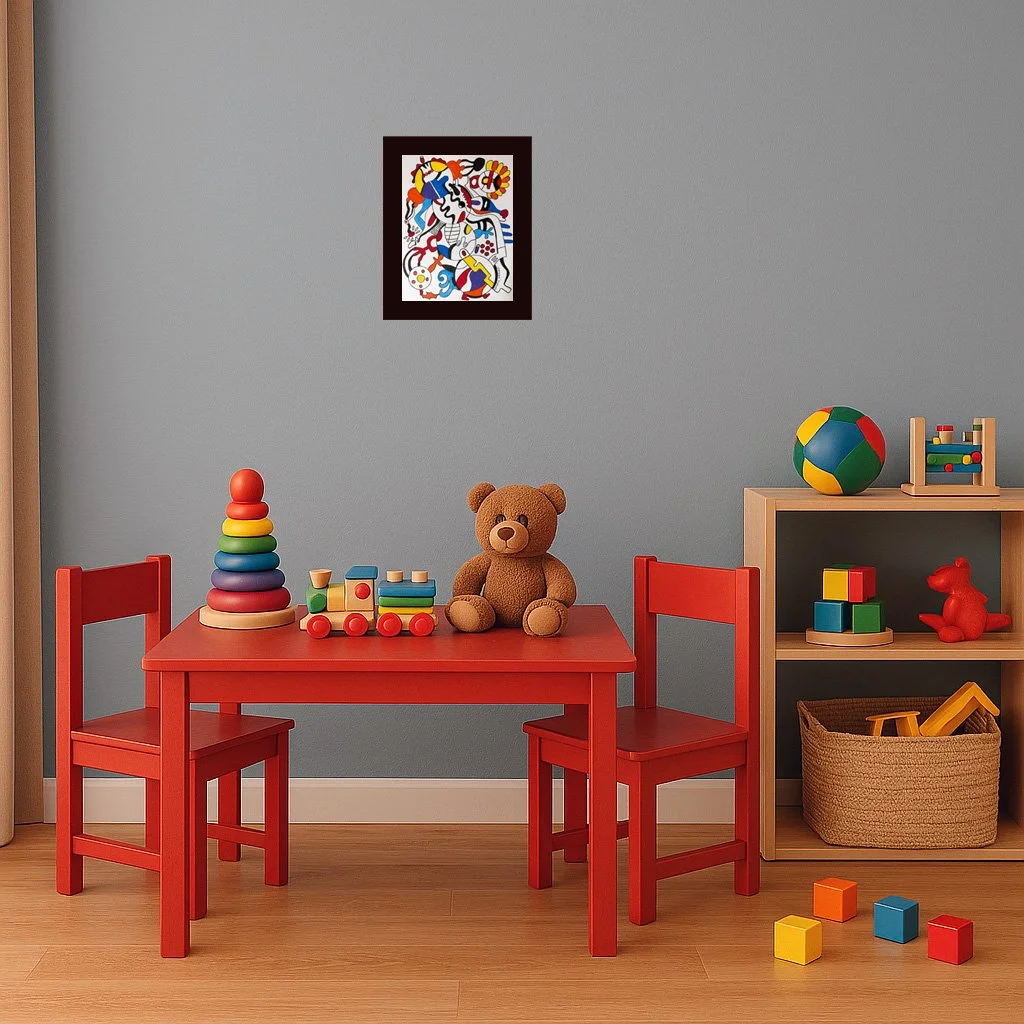
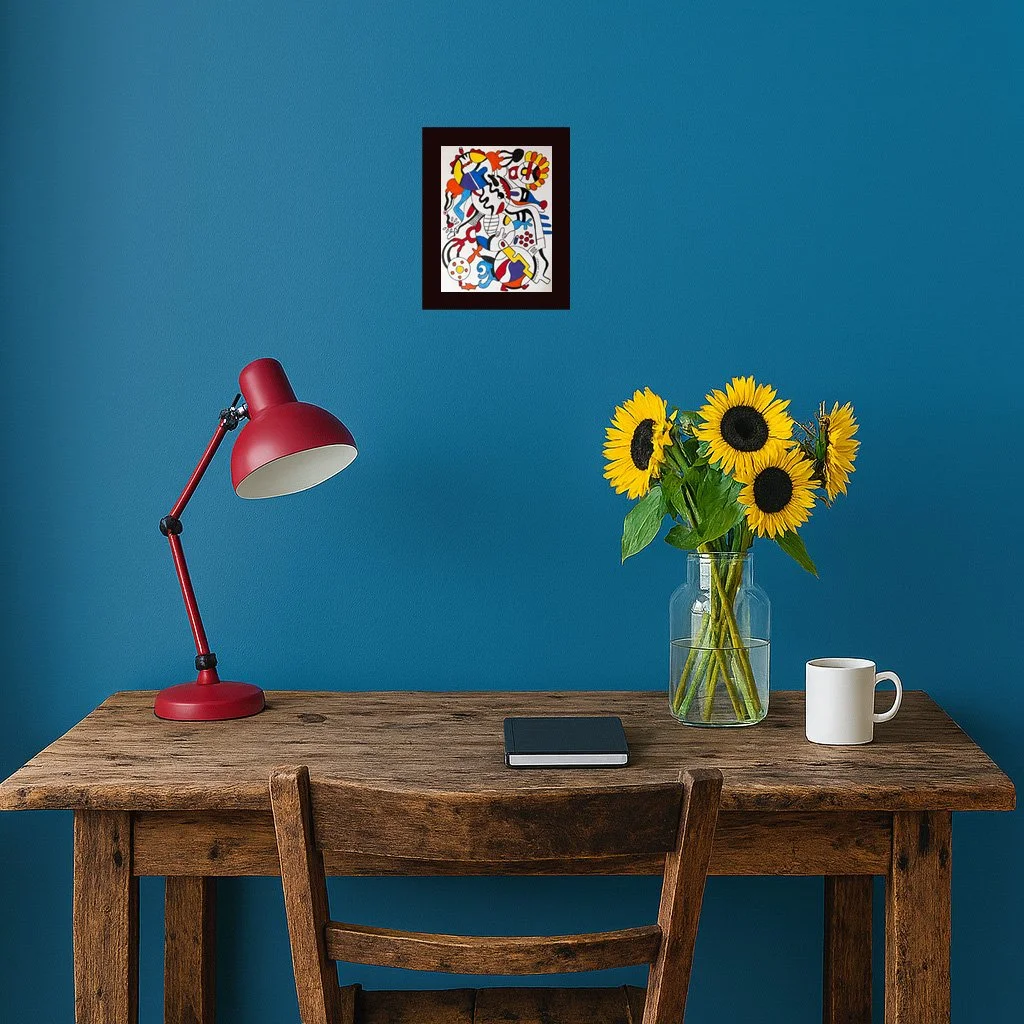
At the center of The Play of Powers stands a figure that seems both conductor and participant. Around it, circles collide, overlap, and negotiate space, creating a visual theater where different forces meet, oppose, and transform one another.

The title does not refer to political or physical power. It speaks instead of the invisible powers that shape our lives: imagination, emotion, desire, memory, intuition, reason, attraction, resistance. None dominates completely. Each takes its turn. Each leaves its mark.

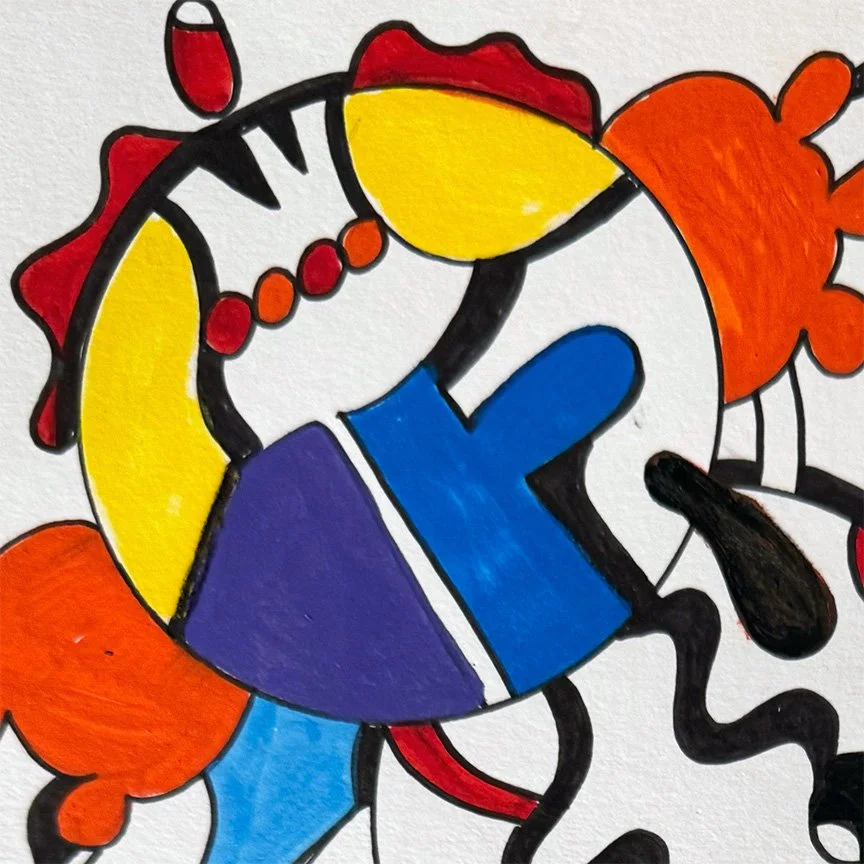
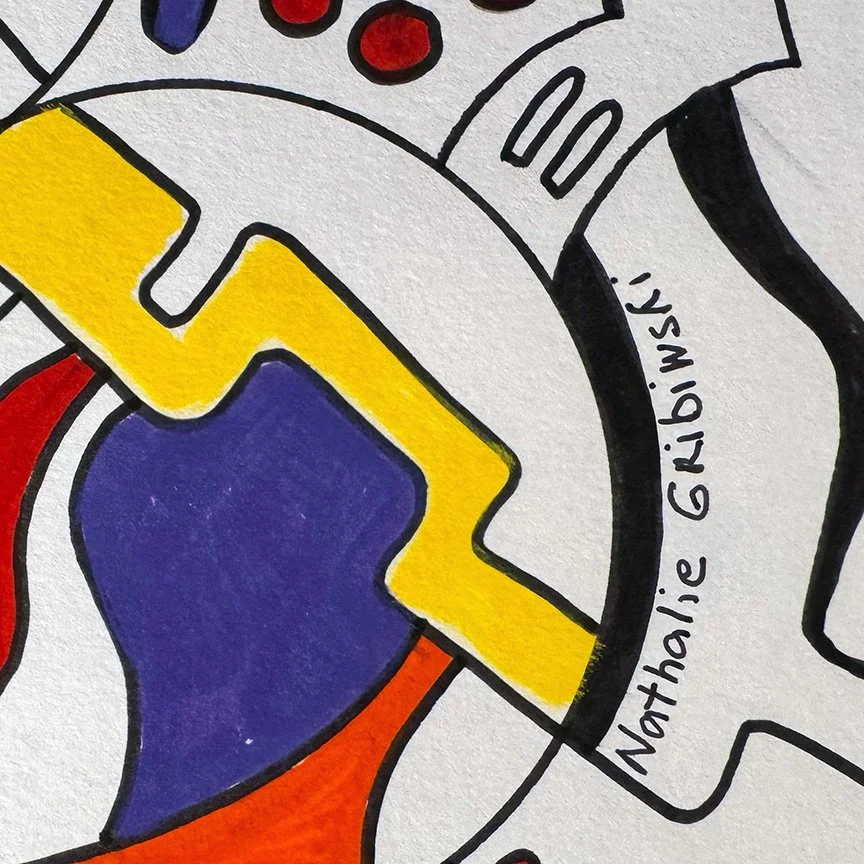
Color plays a crucial role in this balance. Bright yellows radiate energy and optimism. Reds pulse with passion and urgency. Blues introduce movement and reflection, while orange brings warmth and vitality. Against these vibrant accents, black provides structure, holding the composition together like an invisible framework.

The circular forms resemble worlds, ideas, or personalities. Some contain flowers, others abstract creatures, masks, or symbols. They appear to orbit around one another, exchanging influence without ever merging completely. The central face seems caught in the middle of these interactions, absorbing and redistributing their energy.

Unlike works that tell a linear story, The Play of Powers suggests a perpetual process. Every force awakens another force. Every movement creates a response. The painting becomes a map of negotiations between opposing tendencies: order and spontaneity, strength and vulnerability, individuality and connection.

In the Tourliboulis universe, power is rarely about control. It is about interaction. The most powerful element is not a single figure but the dynamic relationship between all the forms. Together they create a living ecosystem of energies, each one influencing the others in an endless and playful exchange.

Acrylics and oil markers on paper
12 × 9 × 0.1 in
2025

At the center of The Play of Powers stands a figure that seems both conductor and participant. Around it, circles collide, overlap, and negotiate space, creating a visual theater where different forces meet, oppose, and transform one another.

The title does not refer to political or physical power. It speaks instead of the invisible powers that shape our lives: imagination, emotion, desire, memory, intuition, reason, attraction, resistance. None dominates completely. Each takes its turn. Each leaves its mark.

Color plays a crucial role in this balance. Bright yellows radiate energy and optimism. Reds pulse with passion and urgency. Blues introduce movement and reflection, while orange brings warmth and vitality. Against these vibrant accents, black provides structure, holding the composition together like an invisible framework.

The circular forms resemble worlds, ideas, or personalities. Some contain flowers, others abstract creatures, masks, or symbols. They appear to orbit around one another, exchanging influence without ever merging completely. The central face seems caught in the middle of these interactions, absorbing and redistributing their energy.

Unlike works that tell a linear story, The Play of Powers suggests a perpetual process. Every force awakens another force. Every movement creates a response. The painting becomes a map of negotiations between opposing tendencies: order and spontaneity, strength and vulnerability, individuality and connection.

In the Tourliboulis universe, power is rarely about control. It is about interaction. The most powerful element is not a single figure but the dynamic relationship between all the forms. Together they create a living ecosystem of energies, each one influencing the others in an endless and playful exchange.