Acrylics and oil markers on paper
12 × 9 × 0.1 in
2025
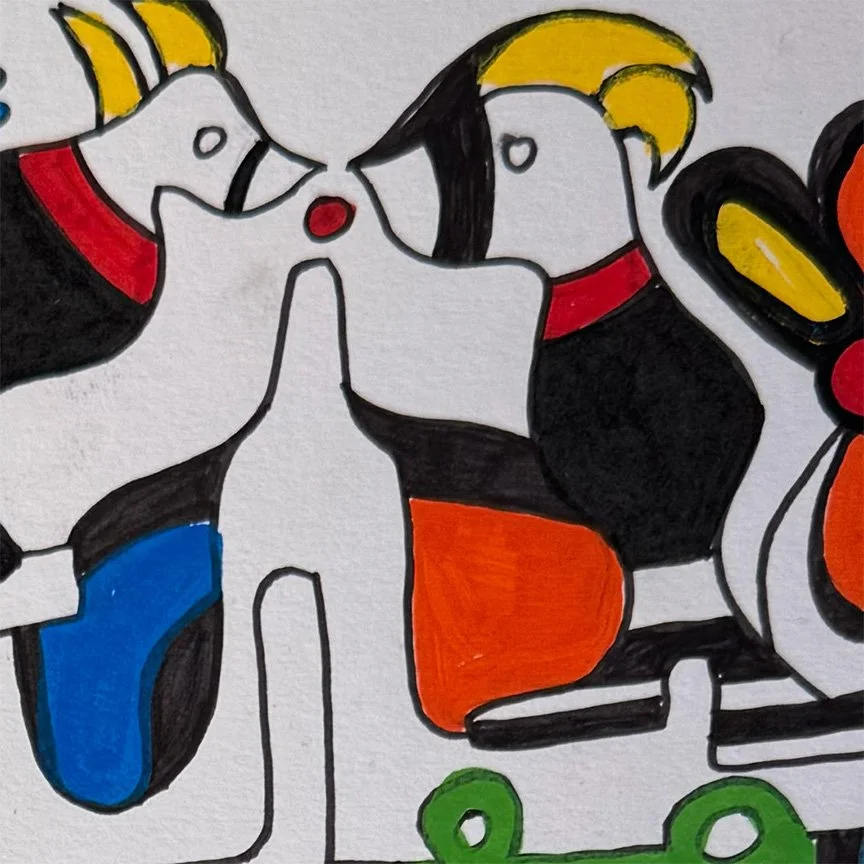
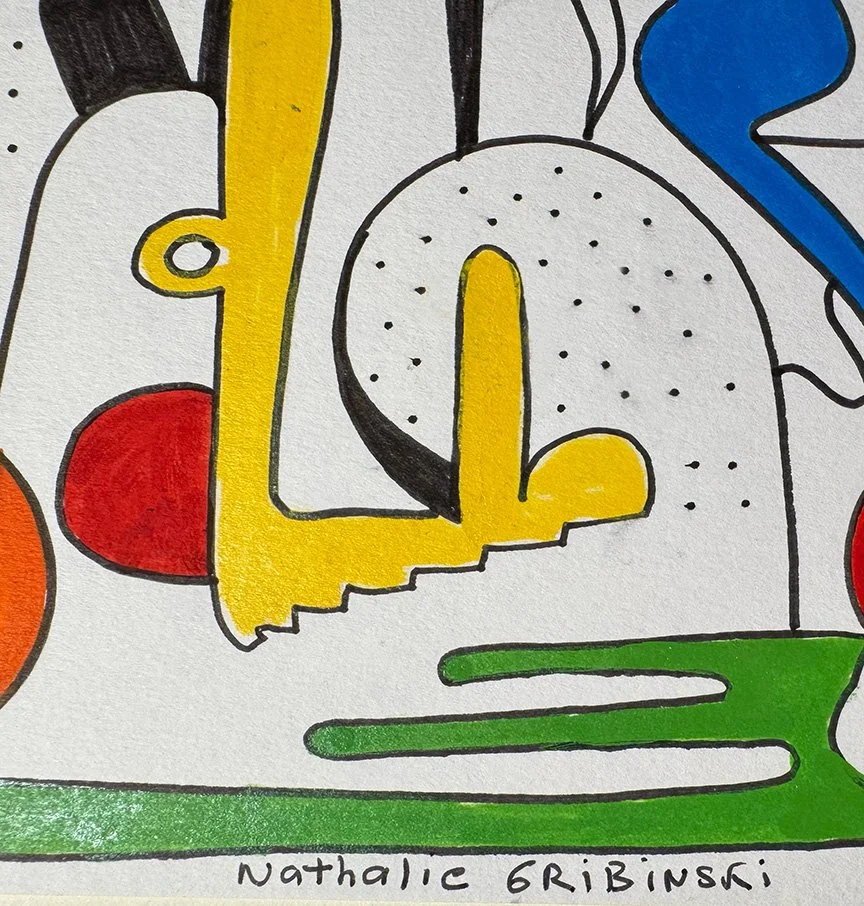
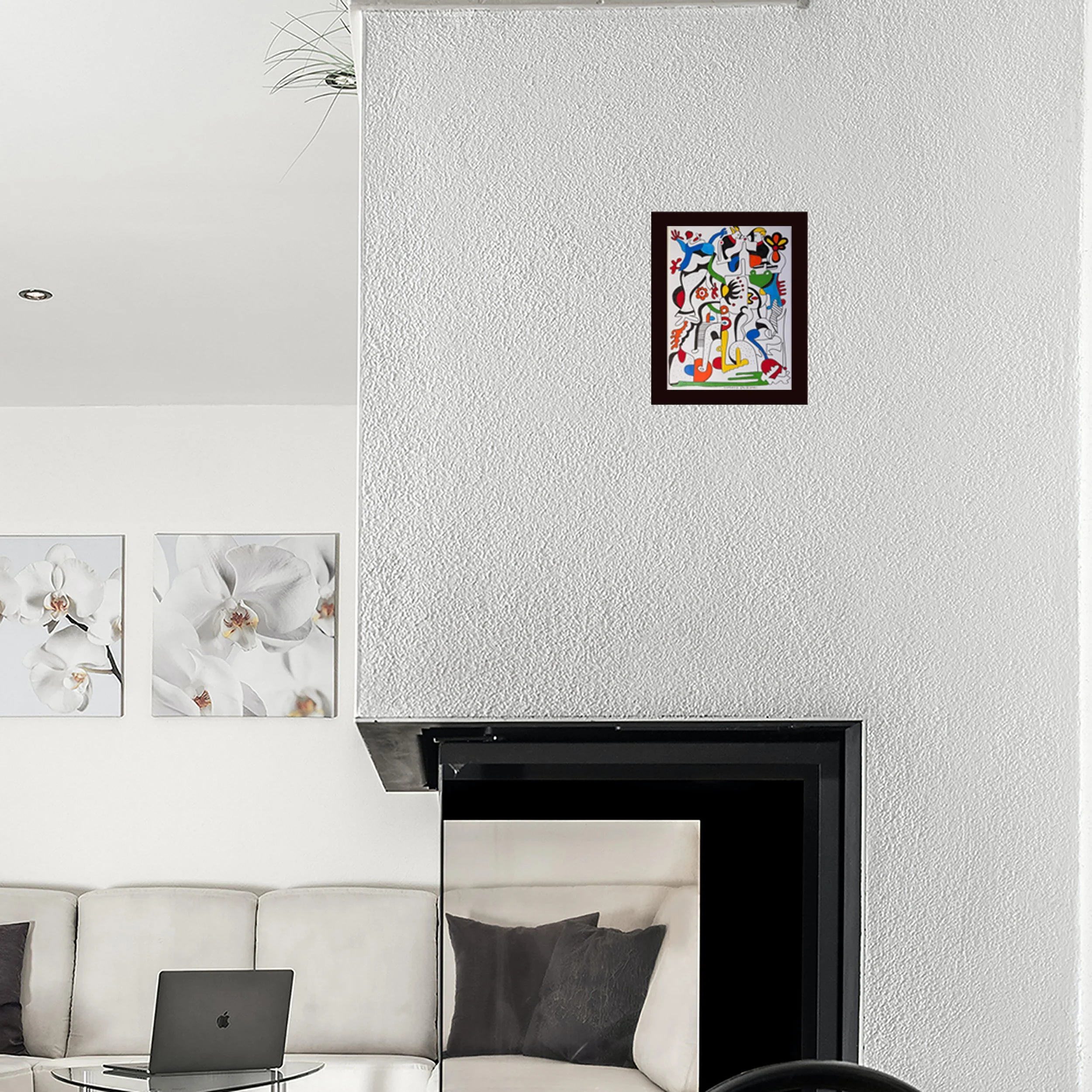
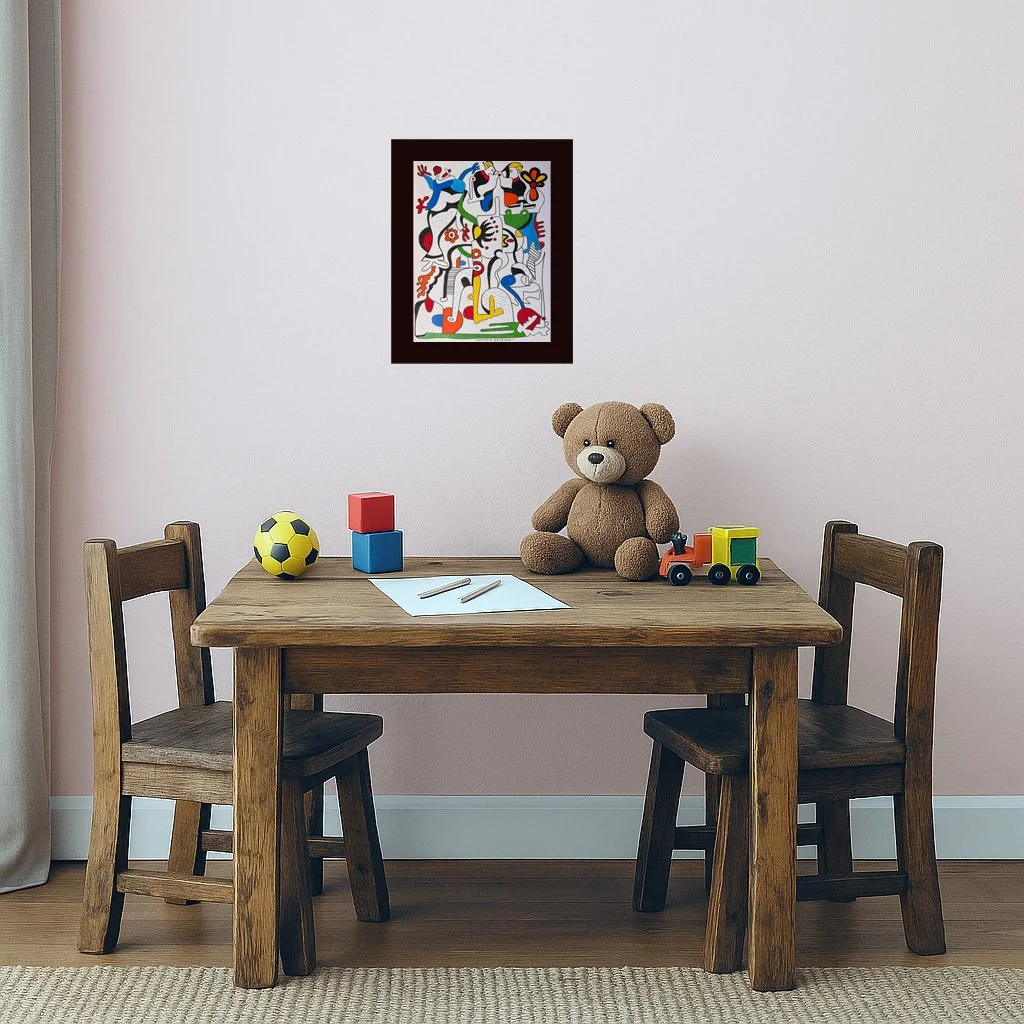
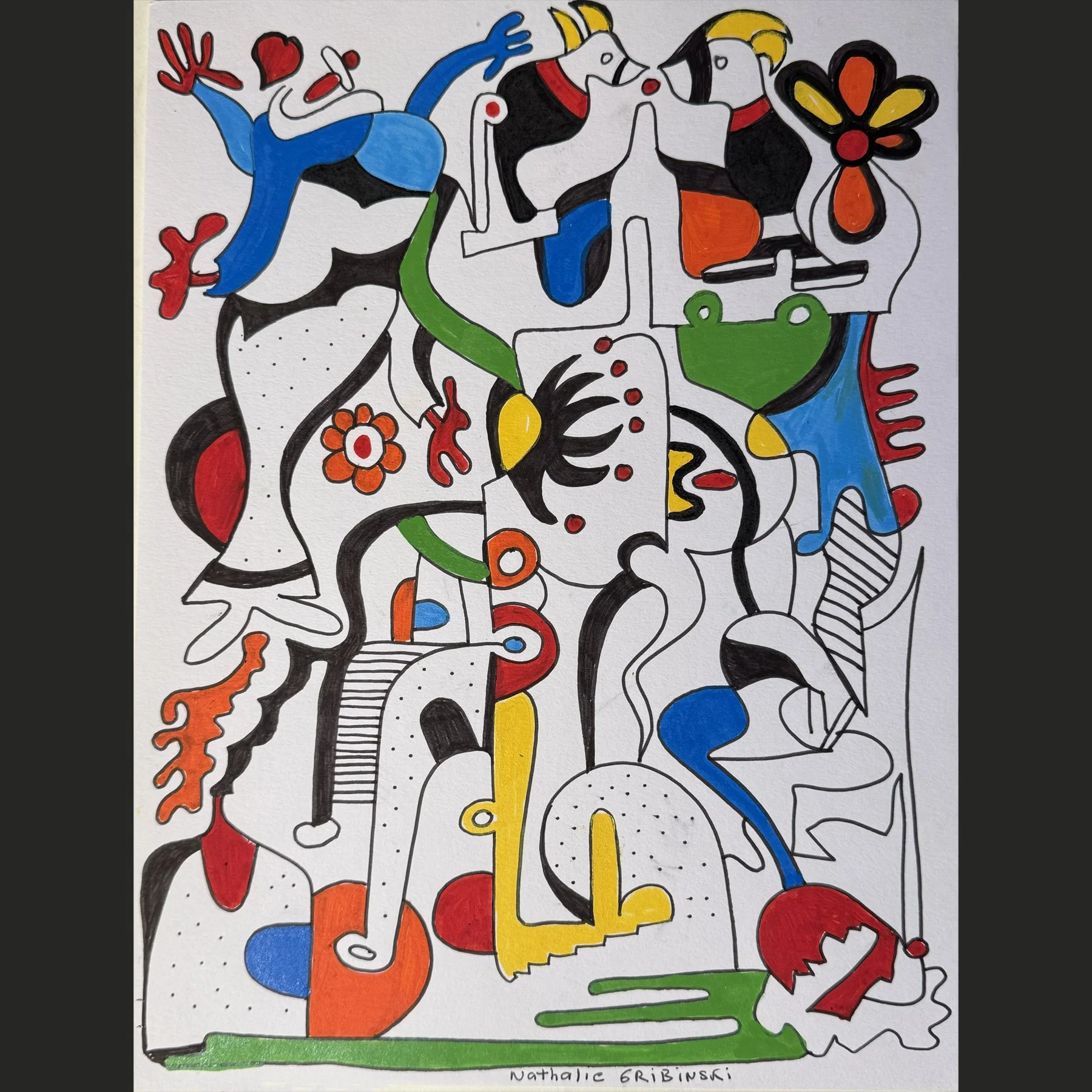
At first glance, this painting appears densely woven, almost architectural. Figures, fragments, animals, flowers, and pathways overlap until they become part of a single living structure. Nothing stands alone. Everything seems to answer something else.
The title The Garden of Echoes comes from that sense of response and repetition. In a garden, seeds become flowers, flowers attract visitors, and every living thing influences another. An echo works the same way. One gesture calls forth another. One voice awakens a second voice.
At the top of the composition, two bird-like figures face each other across a delicate space. They seem engaged in a silent conversation. Nearby flowers repeat circular forms found throughout the painting, while curved pathways and branching shapes carry visual rhythms from one area to another. Colors return like familiar melodies: red, blue, yellow, and green appearing again and again in different guises.
The central figure, with its closed eye and halo of red dots, feels less like an individual than a memory taking shape. Around it, fragments of creatures, plants, and architectures emerge and dissolve, as if the entire garden were built from recollections rather than physical objects.
In the Tourliboulis world, echoes are not copies. They are transformations. A flower becomes a thought. A bird becomes a conversation. A line becomes a path. What returns is never exactly the same as what first appeared.
The Garden of Echoes invites us into a place where every form is connected to another, where ideas travel through color and shape, and where the smallest gesture can continue to resonate long after it is made.
Acrylics and oil markers on paper
12 × 9 × 0.1 in
2025
At first glance, this painting appears densely woven, almost architectural. Figures, fragments, animals, flowers, and pathways overlap until they become part of a single living structure. Nothing stands alone. Everything seems to answer something else.
The title The Garden of Echoes comes from that sense of response and repetition. In a garden, seeds become flowers, flowers attract visitors, and every living thing influences another. An echo works the same way. One gesture calls forth another. One voice awakens a second voice.
At the top of the composition, two bird-like figures face each other across a delicate space. They seem engaged in a silent conversation. Nearby flowers repeat circular forms found throughout the painting, while curved pathways and branching shapes carry visual rhythms from one area to another. Colors return like familiar melodies: red, blue, yellow, and green appearing again and again in different guises.
The central figure, with its closed eye and halo of red dots, feels less like an individual than a memory taking shape. Around it, fragments of creatures, plants, and architectures emerge and dissolve, as if the entire garden were built from recollections rather than physical objects.
In the Tourliboulis world, echoes are not copies. They are transformations. A flower becomes a thought. A bird becomes a conversation. A line becomes a path. What returns is never exactly the same as what first appeared.
The Garden of Echoes invites us into a place where every form is connected to another, where ideas travel through color and shape, and where the smallest gesture can continue to resonate long after it is made.