Acrylics and oil markers on paper
12 × 9 × 0.1 in
2025
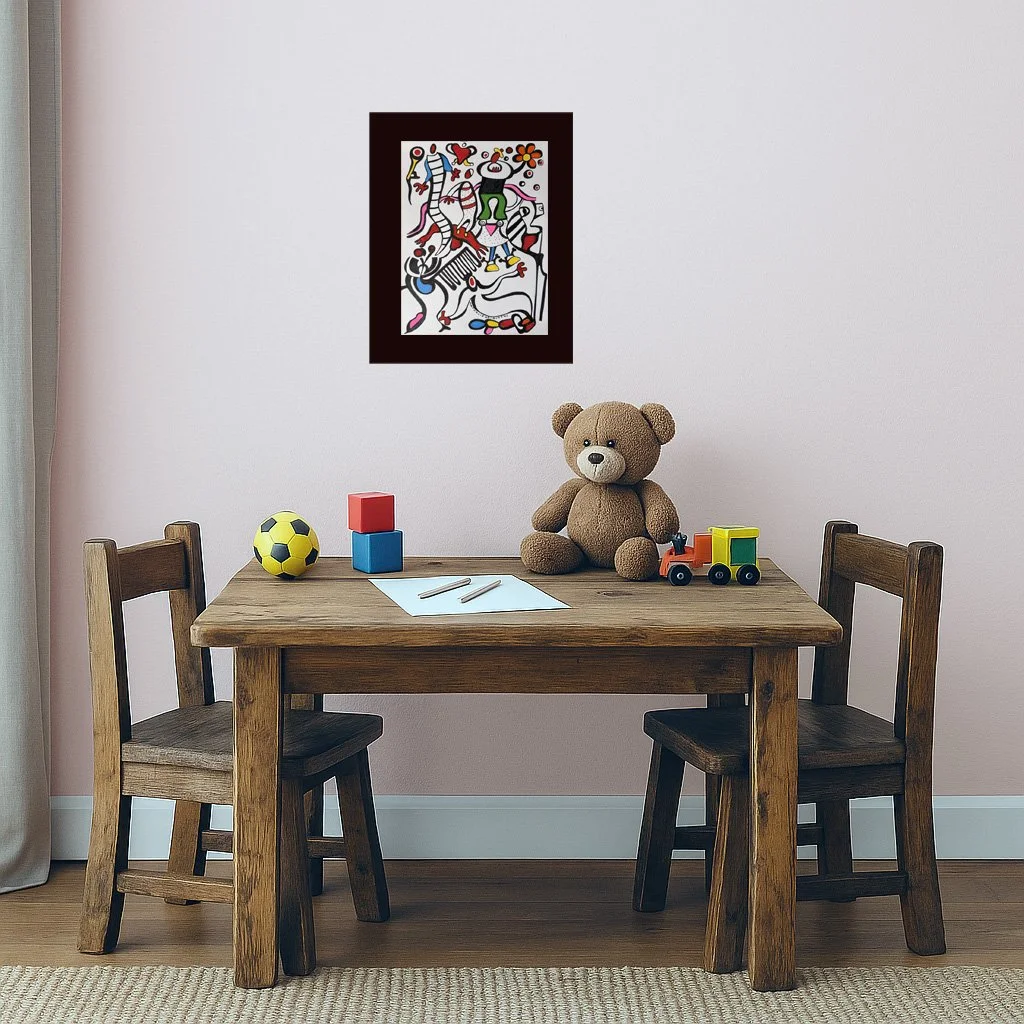
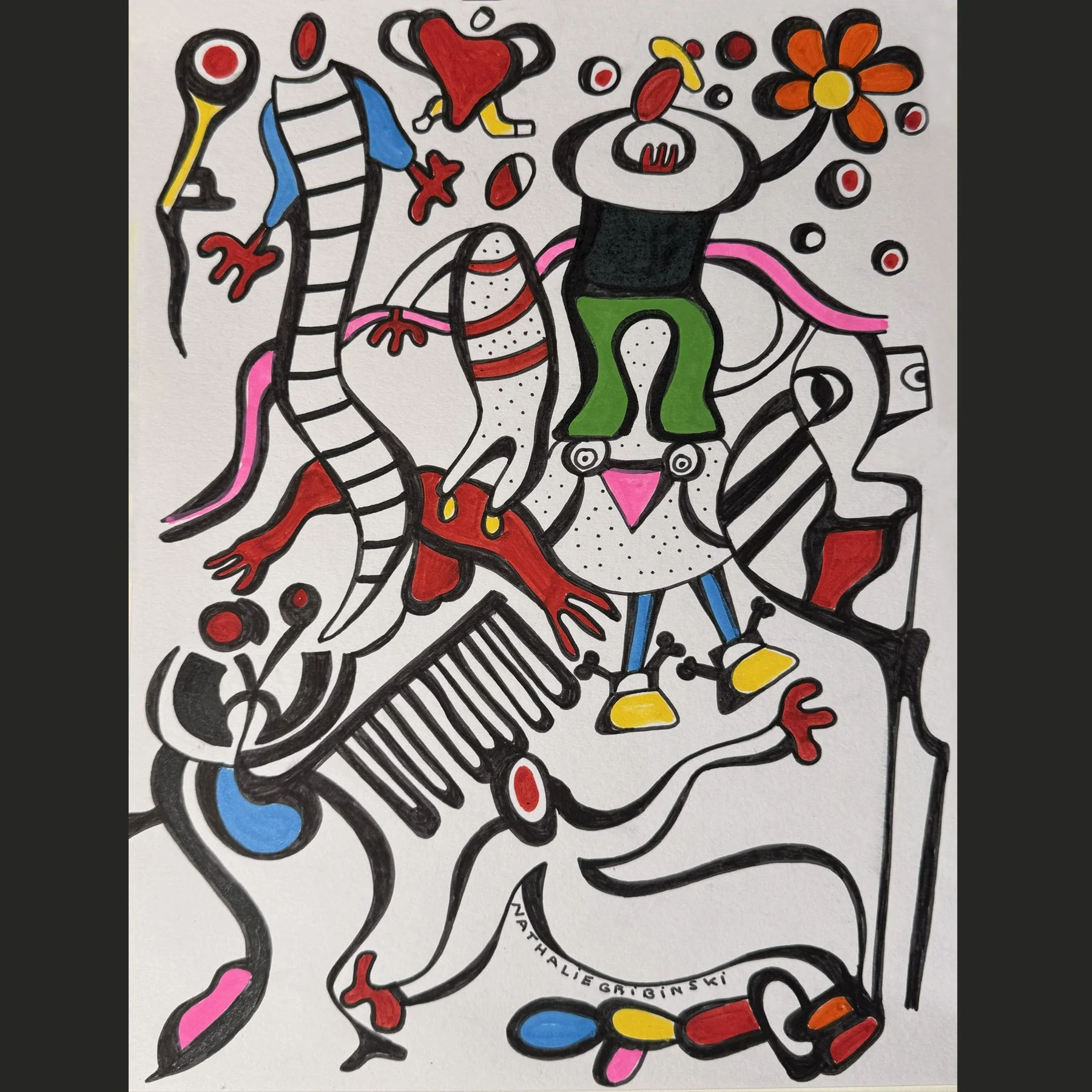
In a world where everything seems assembled from fragments, a flower rises quietly above the noise.
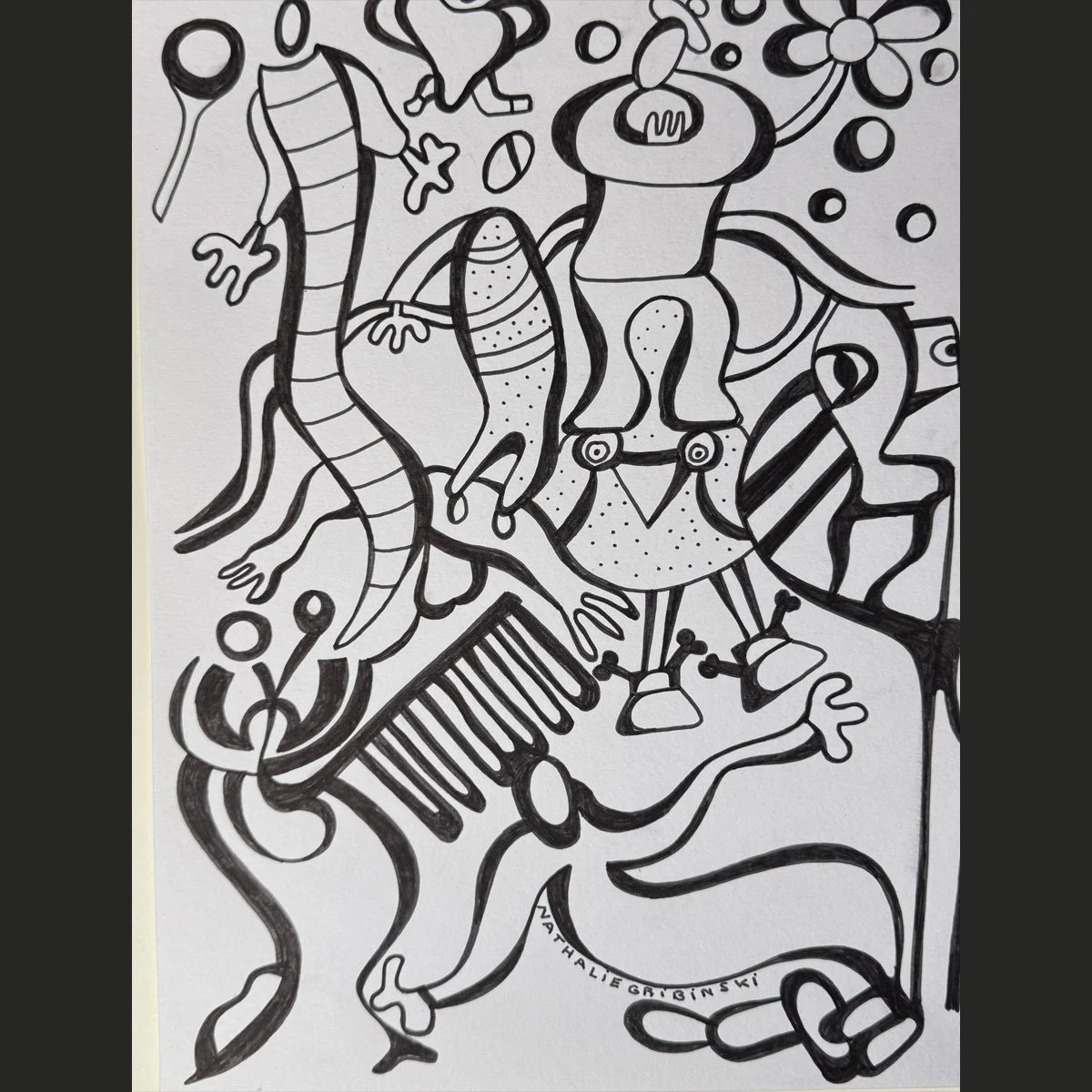
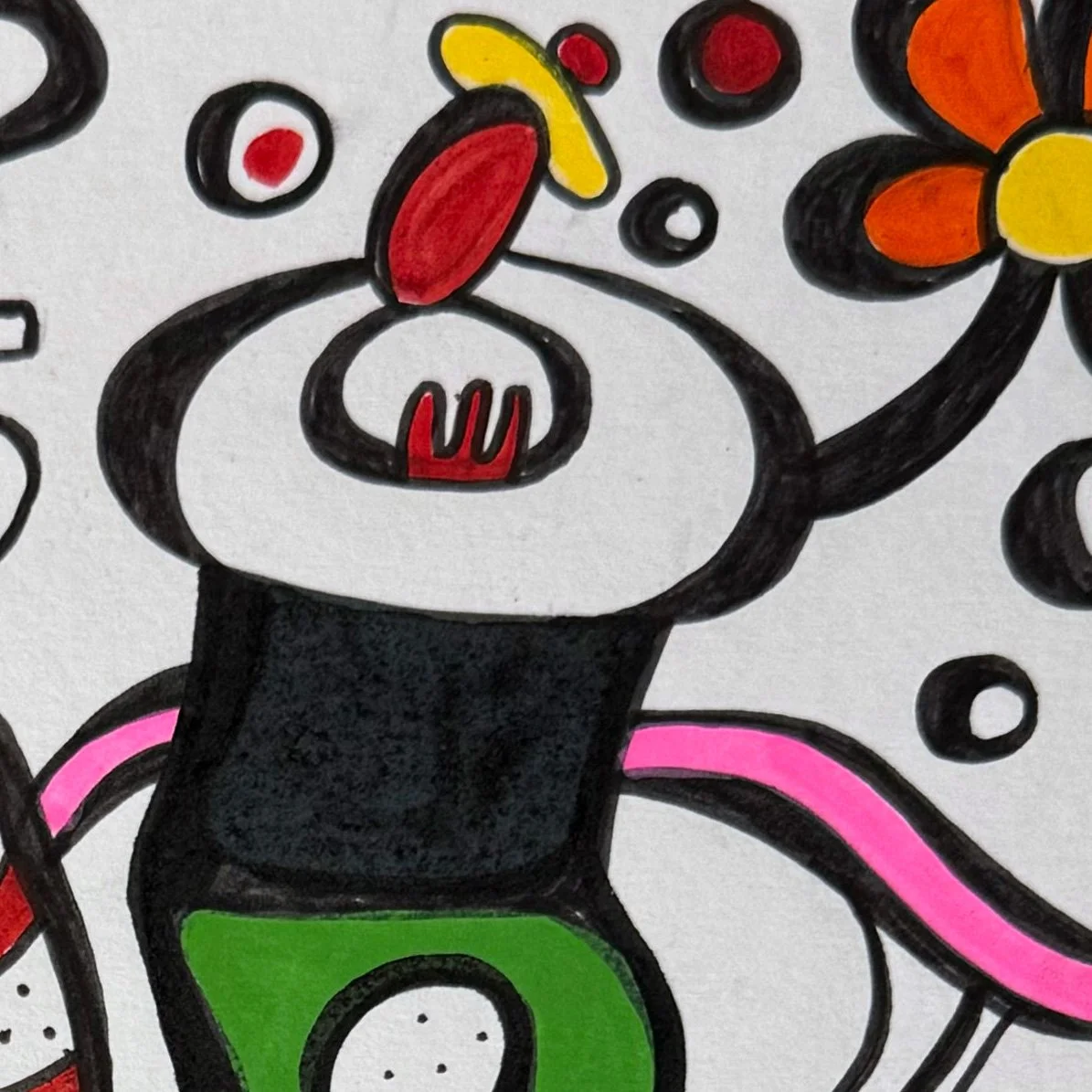
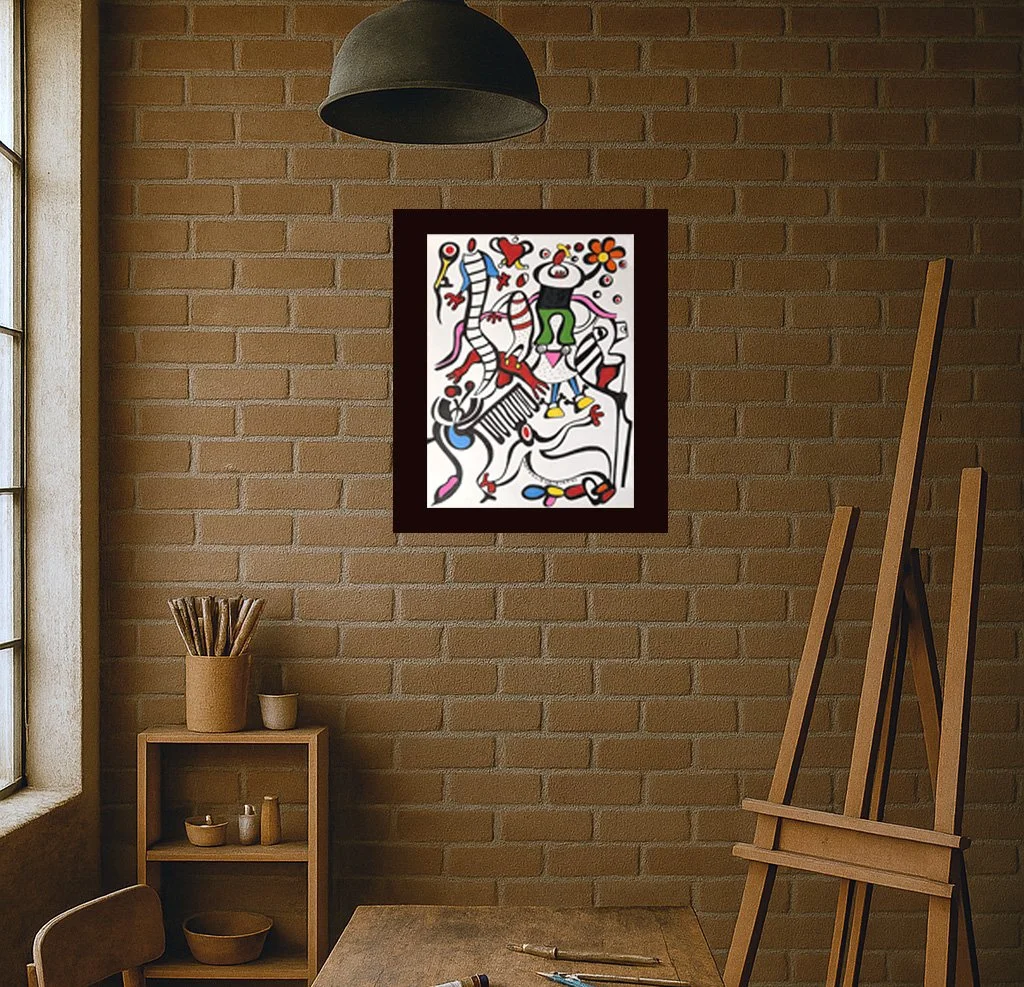
Beneath it stands a curious being whose body appears partly mechanical, partly alive. Wheels, stripes, articulated forms, and geometric structures suggest a creature built rather than born. Yet at the center of the composition floats a bright red heart, impossible to ignore.
The heart is not hidden inside the machine. It hovers above it, like a guiding star, a destination, or perhaps a reminder.
Around the figure, forms intertwine like circuits searching for connection. A ladder-like body stretches upward, strange creatures emerge from unexpected places, and a large comb-like shape seems to untangle invisible knots. The entire scene balances between order and improvisation, logic and emotion.
The flower becomes the key to the story. It represents what cannot be manufactured: wonder, tenderness, beauty, and the capacity to grow. The machine may become more complex, more efficient, more sophisticated, but it still reaches toward the flower.
The Flower and the Mechano-Heart imagines a meeting between invention and feeling. It asks whether intelligence alone is enough, or whether every truly living thing—human, animal, or machine—must eventually learn to follow the path of the heart.
In the Tourliboulis universe, the answer is simple: the most extraordinary mechanism is not the machine itself, but its desire to bloom.
Acrylics and oil markers on paper
12 × 9 × 0.1 in
2025
In a world where everything seems assembled from fragments, a flower rises quietly above the noise.
Beneath it stands a curious being whose body appears partly mechanical, partly alive. Wheels, stripes, articulated forms, and geometric structures suggest a creature built rather than born. Yet at the center of the composition floats a bright red heart, impossible to ignore.
The heart is not hidden inside the machine. It hovers above it, like a guiding star, a destination, or perhaps a reminder.
Around the figure, forms intertwine like circuits searching for connection. A ladder-like body stretches upward, strange creatures emerge from unexpected places, and a large comb-like shape seems to untangle invisible knots. The entire scene balances between order and improvisation, logic and emotion.
The flower becomes the key to the story. It represents what cannot be manufactured: wonder, tenderness, beauty, and the capacity to grow. The machine may become more complex, more efficient, more sophisticated, but it still reaches toward the flower.
The Flower and the Mechano-Heart imagines a meeting between invention and feeling. It asks whether intelligence alone is enough, or whether every truly living thing—human, animal, or machine—must eventually learn to follow the path of the heart.
In the Tourliboulis universe, the answer is simple: the most extraordinary mechanism is not the machine itself, but its desire to bloom.