

Paintings
The Tourlicoulis Universe
The Tourlicoulis is not a style. It is a language.
I invented the word Tourlicoulis more than twenty-five years ago, when I realized that the universe growing through my paintings needed a name. Inspired by the musicality of the French language, it became the name of a world in constant evolution, where imagination is free, transformation is natural, and everything communicates.
The Tourlicoulis universe is populated by creatures, birds, flowers, hands, and ever-changing forms. Here, one thing may become another. A flower may become a bird. A hand may become a landscape. Nothing is fixed. Everything is connected.
The Tourlicoulis is my visual language. It allows me to explore human relationships through play, transformation, and imagination. Play is not decoration or entertainment—it is a way of understanding the world. It invites curiosity, encourages discovery, and reminds us that imagination has no limits.
Human relationships are at the heart of this universe. Differences are not only accepted—they are celebrated. Every form has a place. Every color has a voice. Every painting opens a new conversation.
Like every living language, the Tourlicoulis continues to evolve. Each new painting expands its vocabulary, revealing unexpected relationships between color, rhythm, movement, and emotion.
It grows with every painting, and I invite you to enter the conversation.
Original Tourlicoulis
The birth of a language
1998-2004
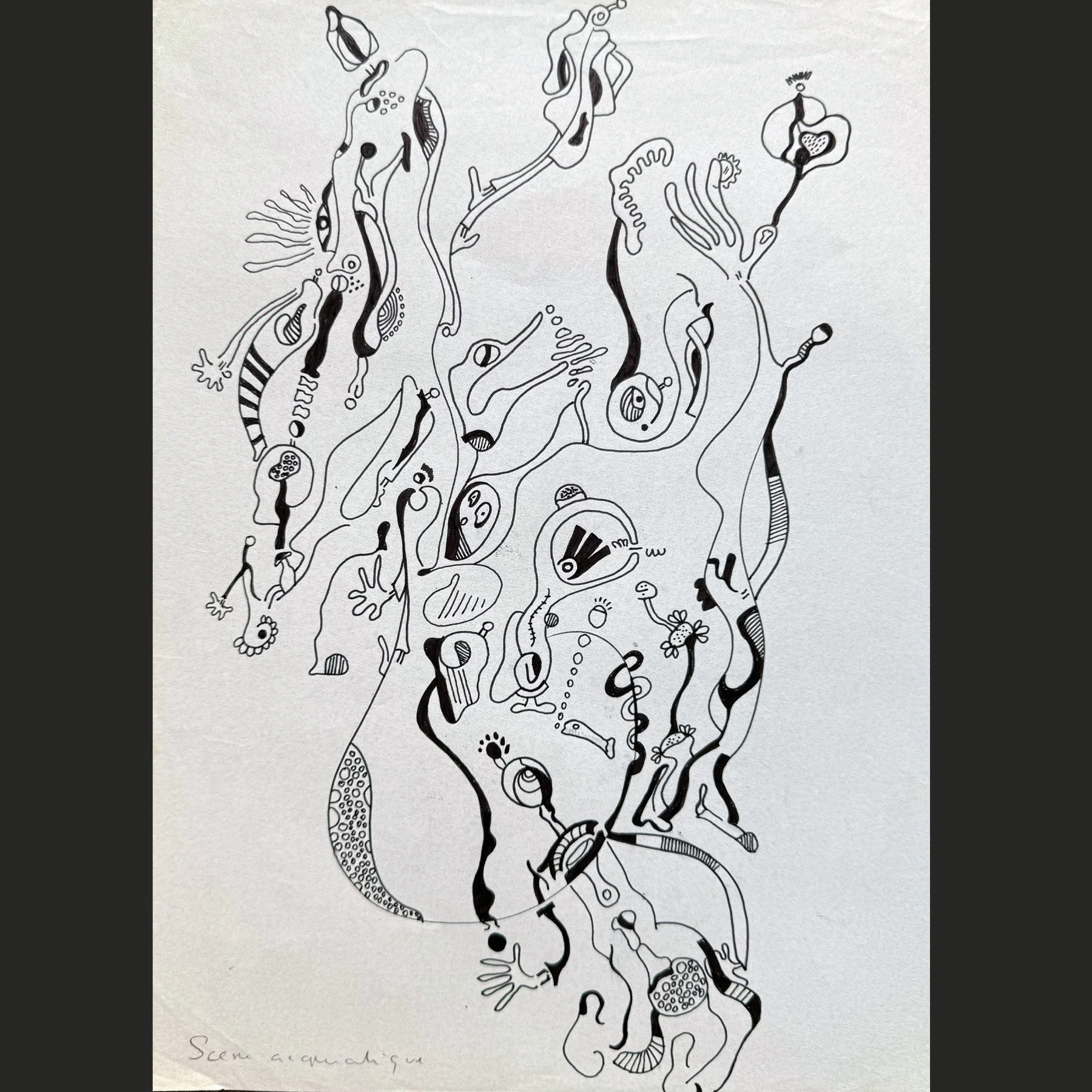
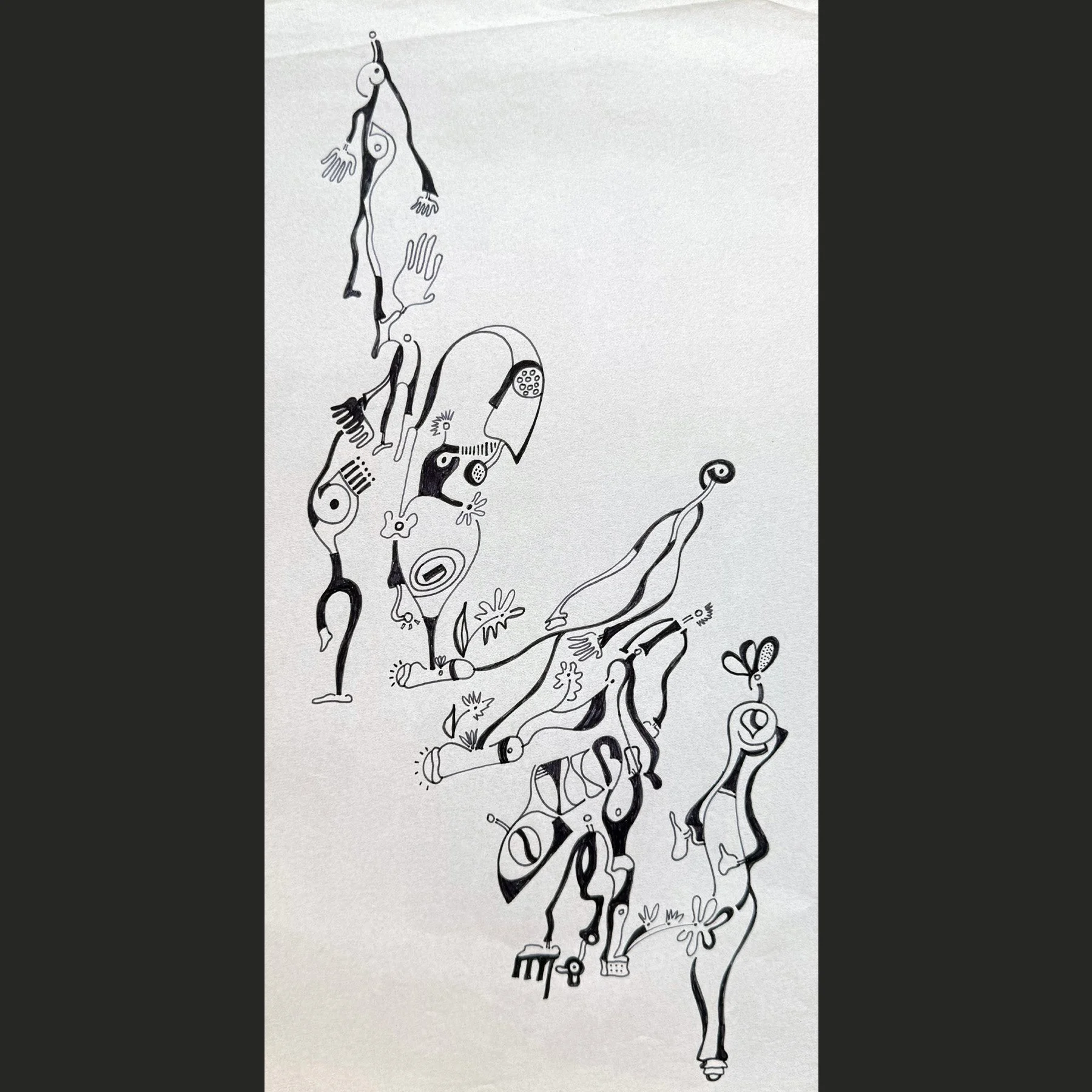
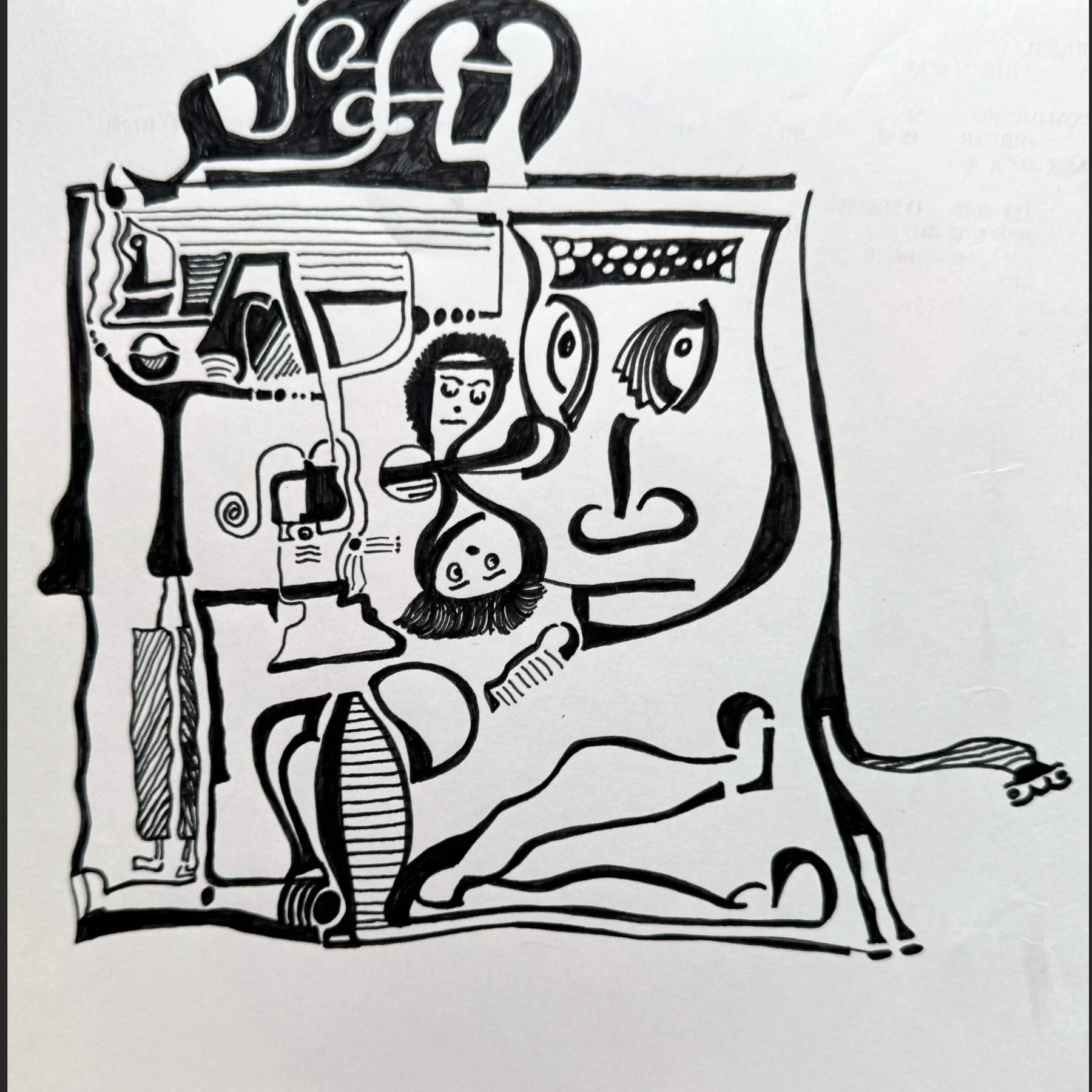
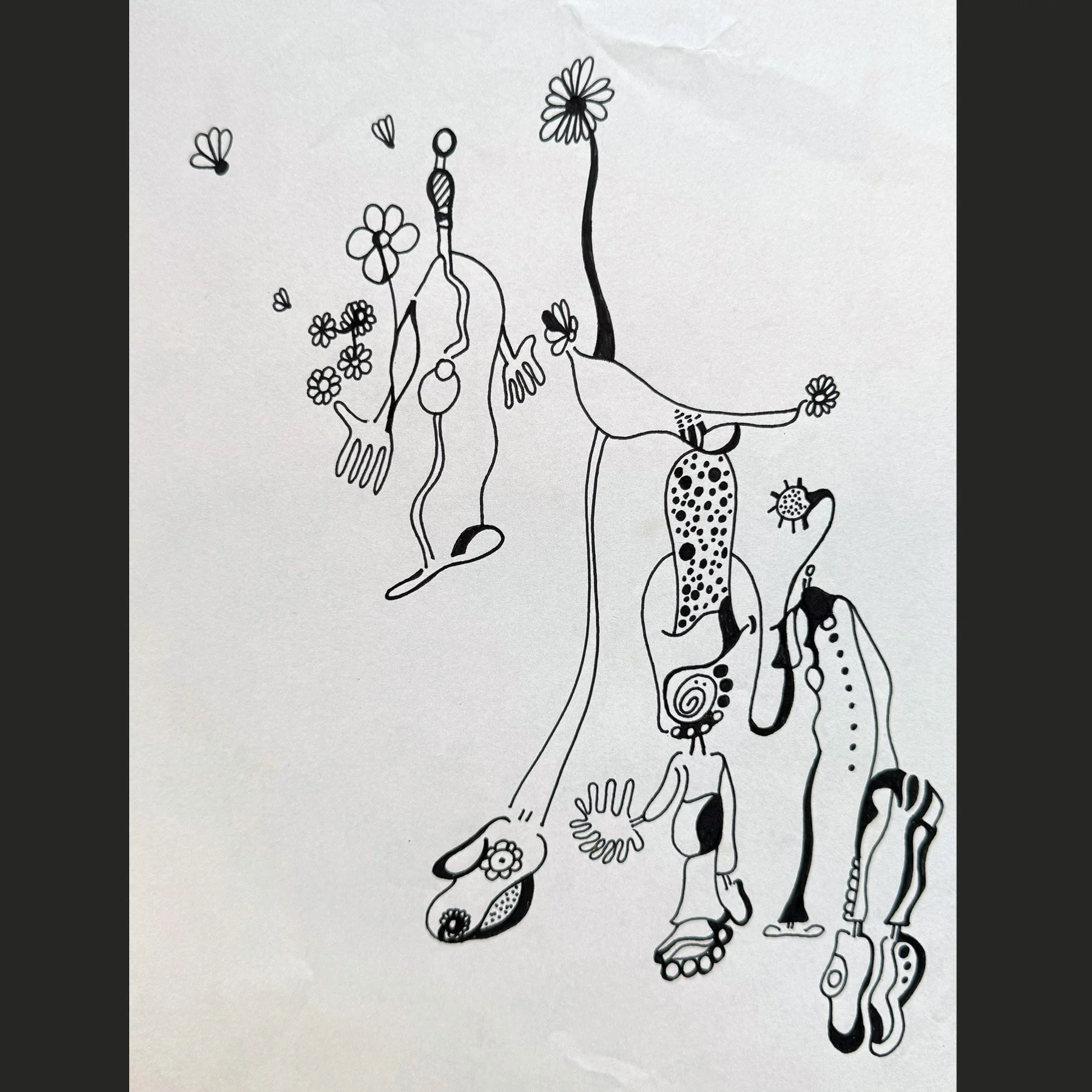
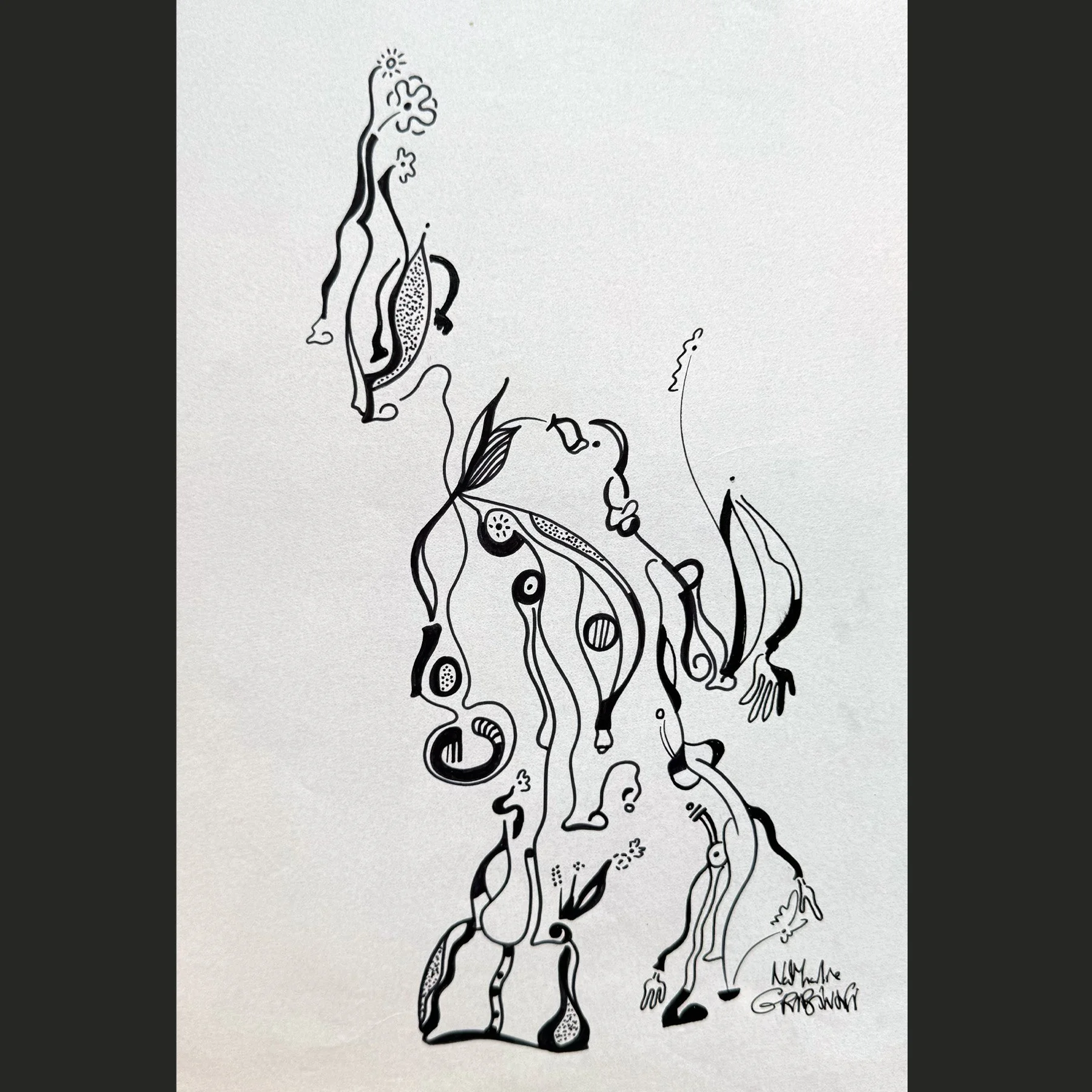
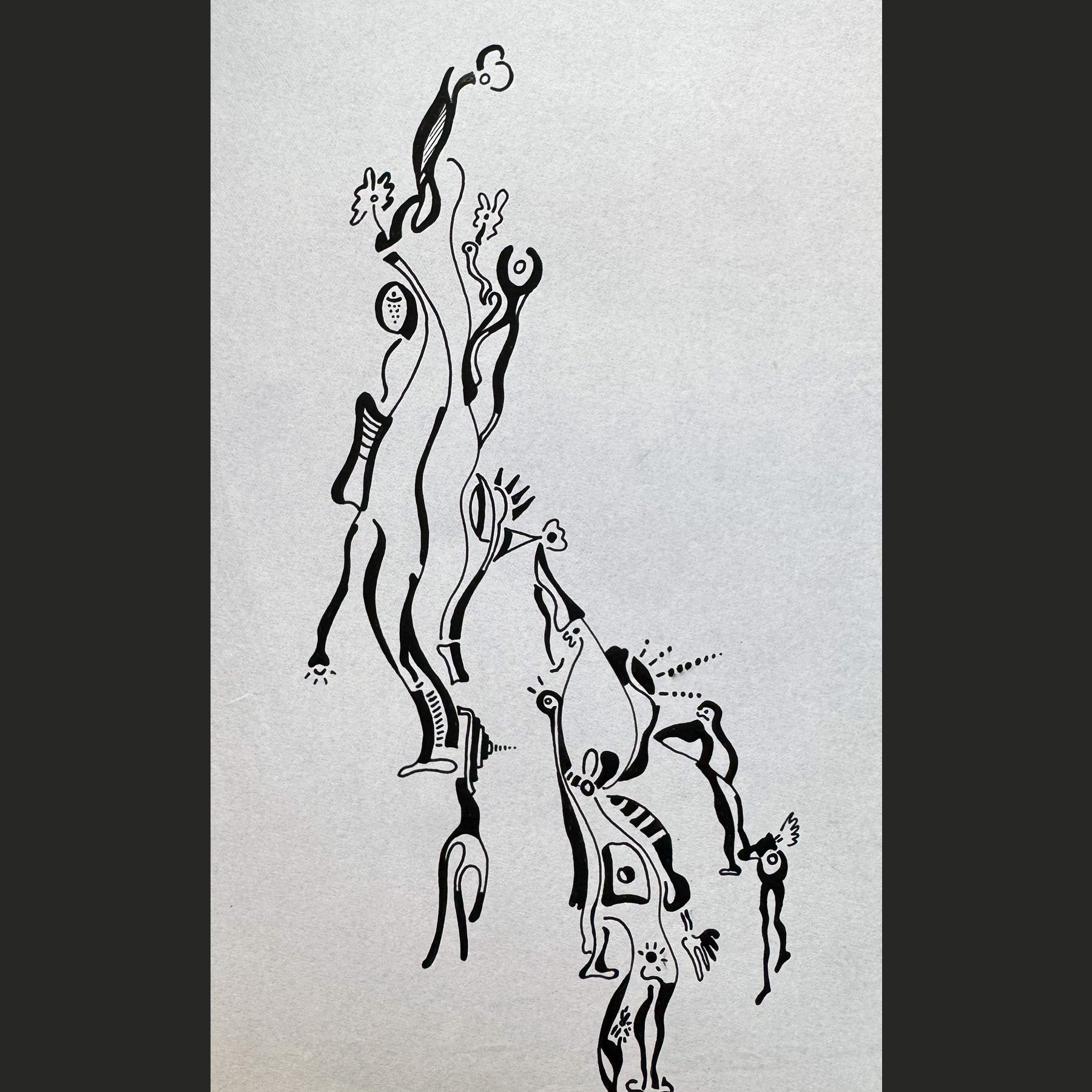
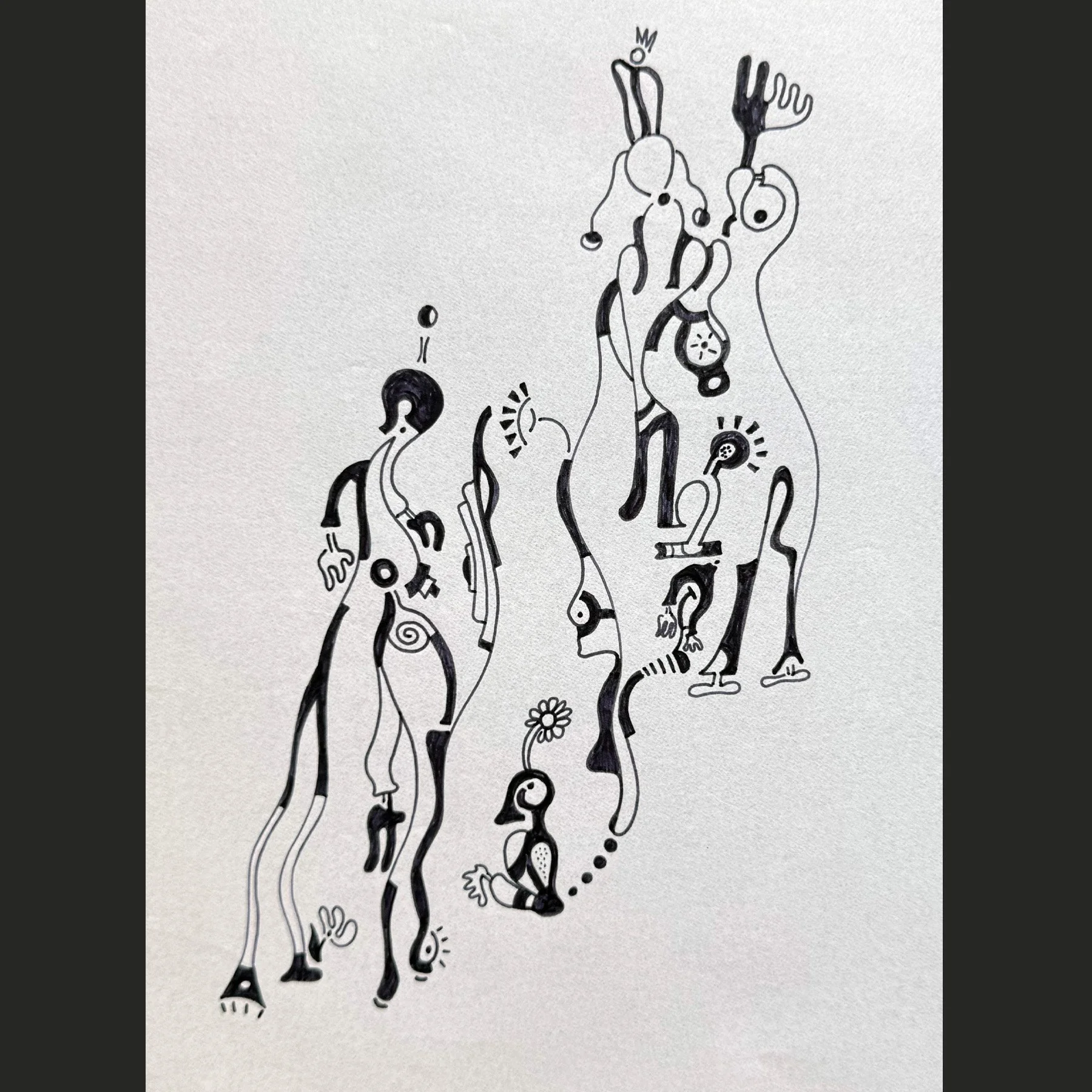
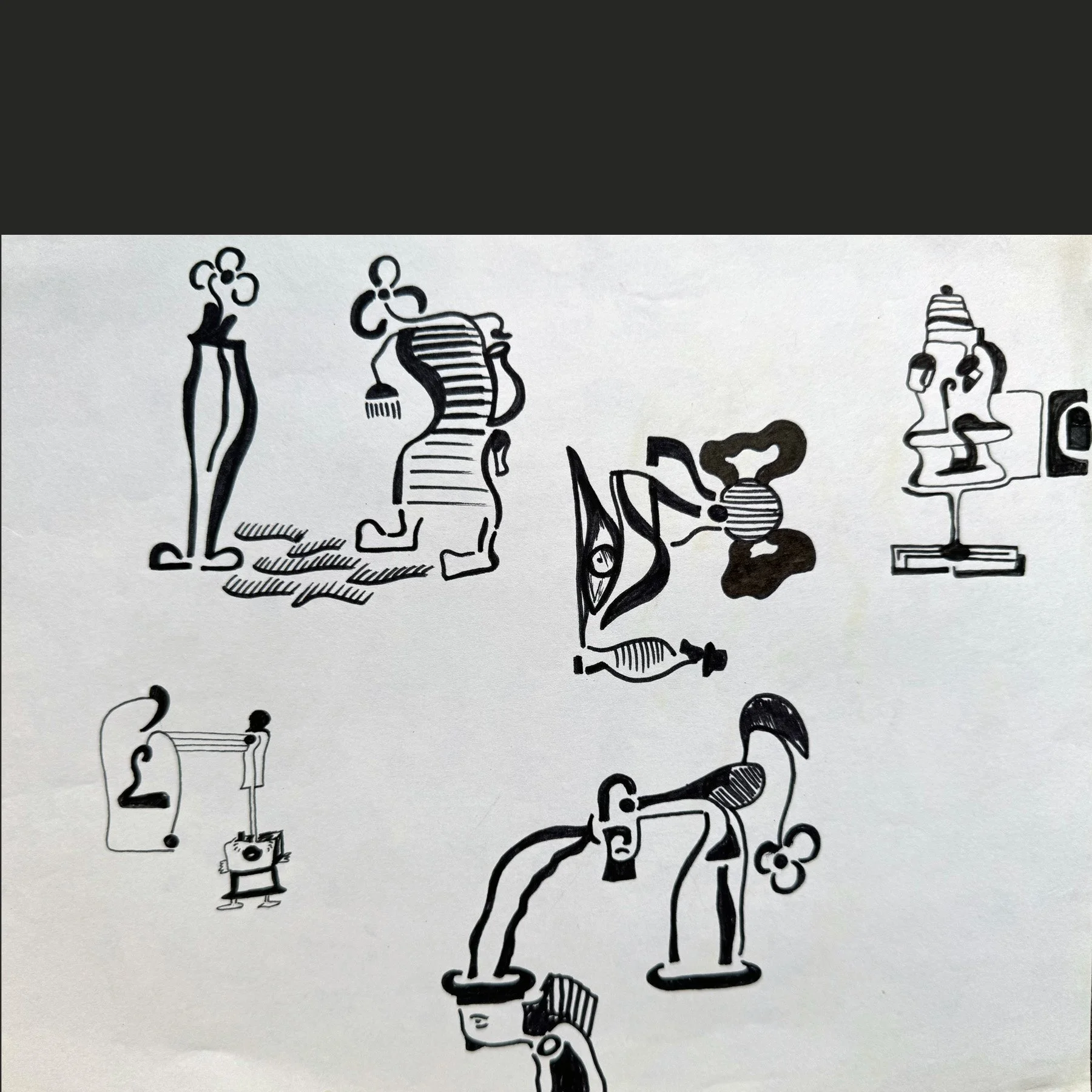
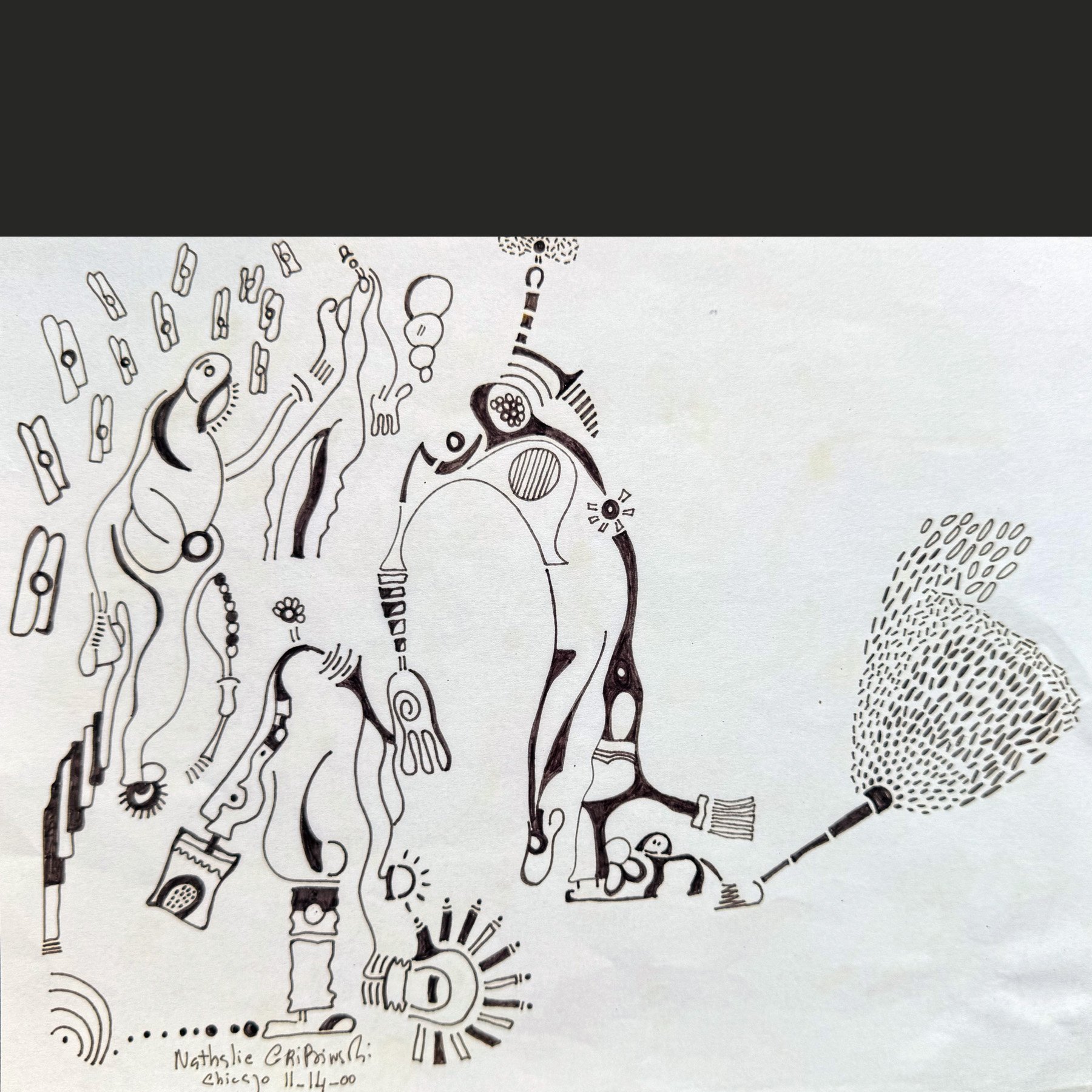
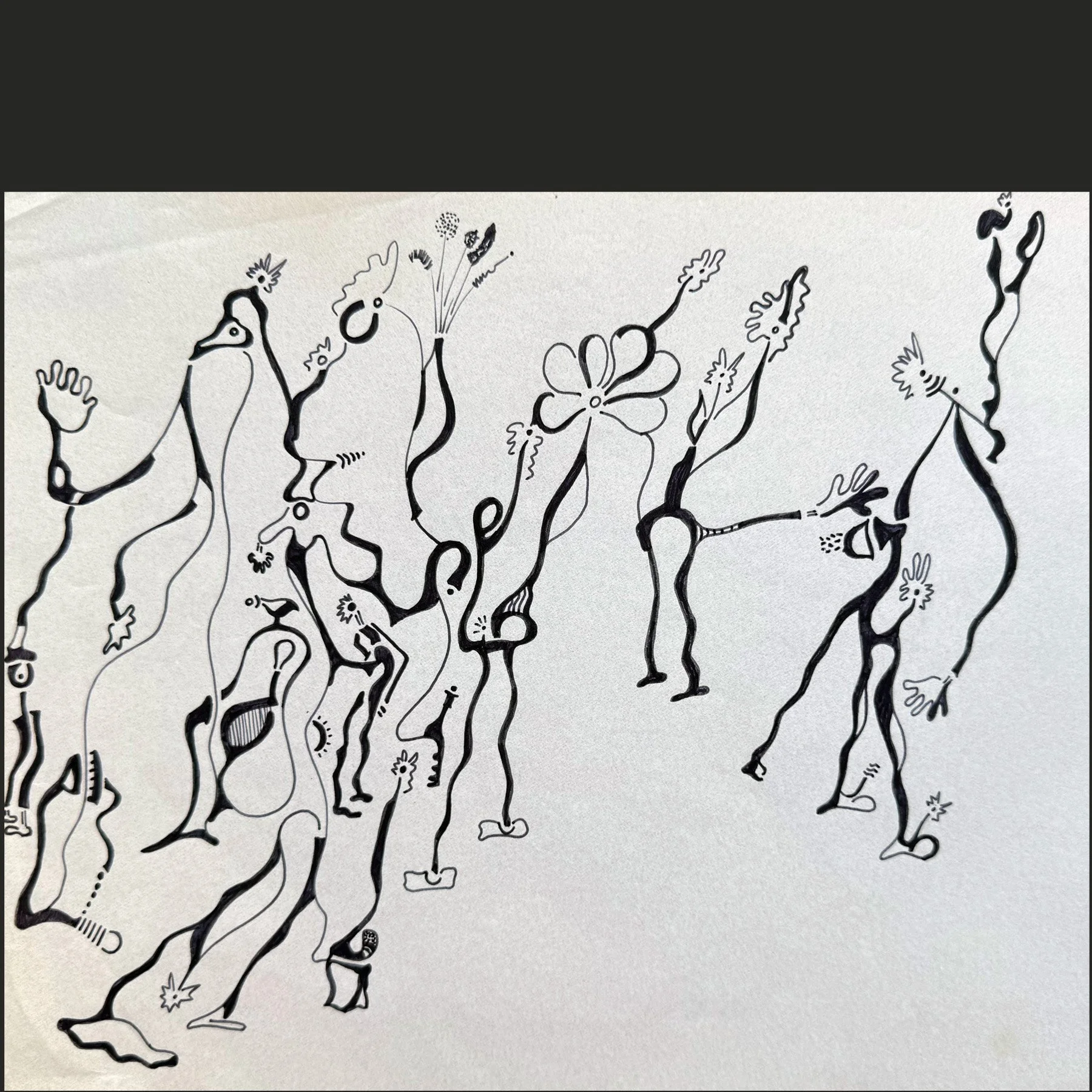
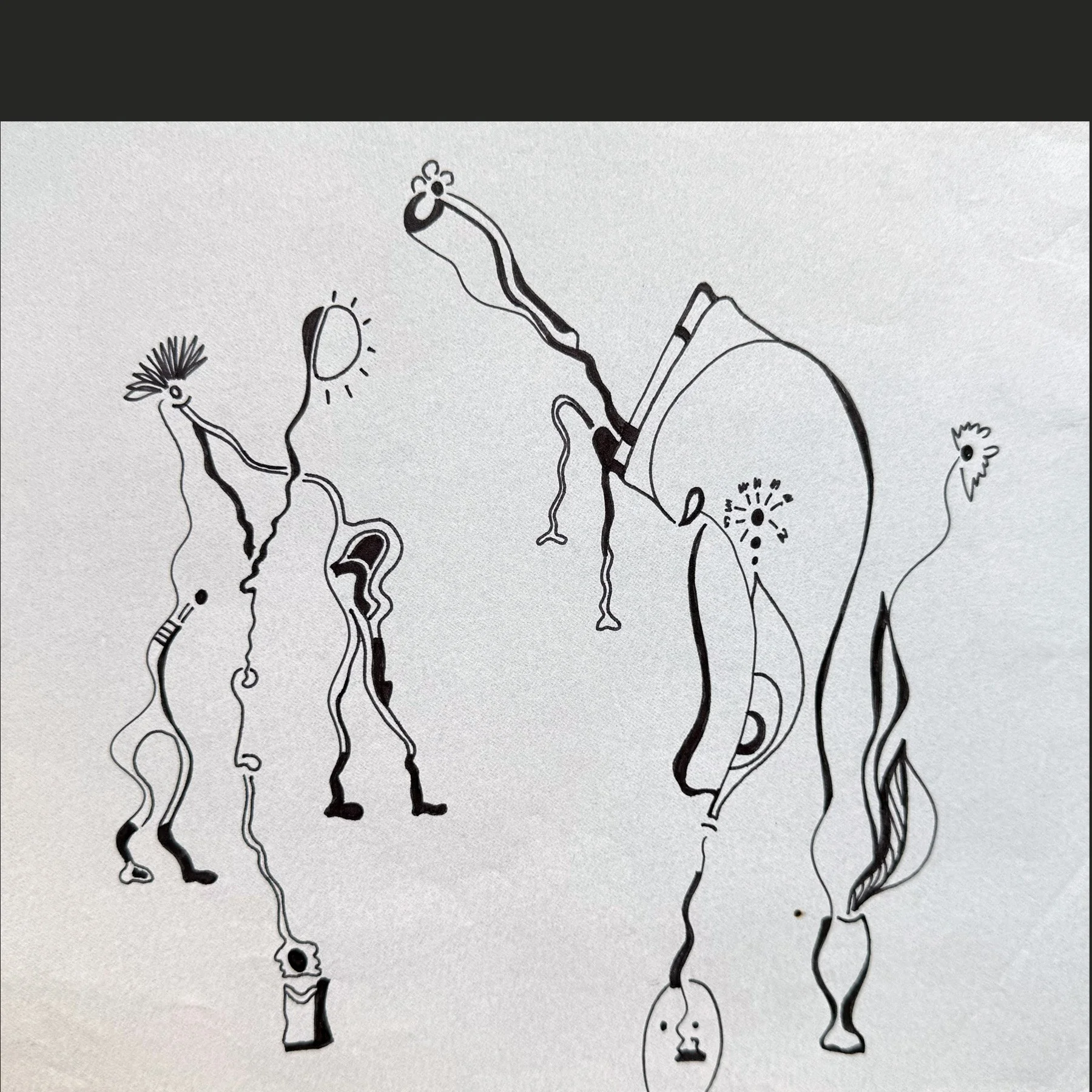
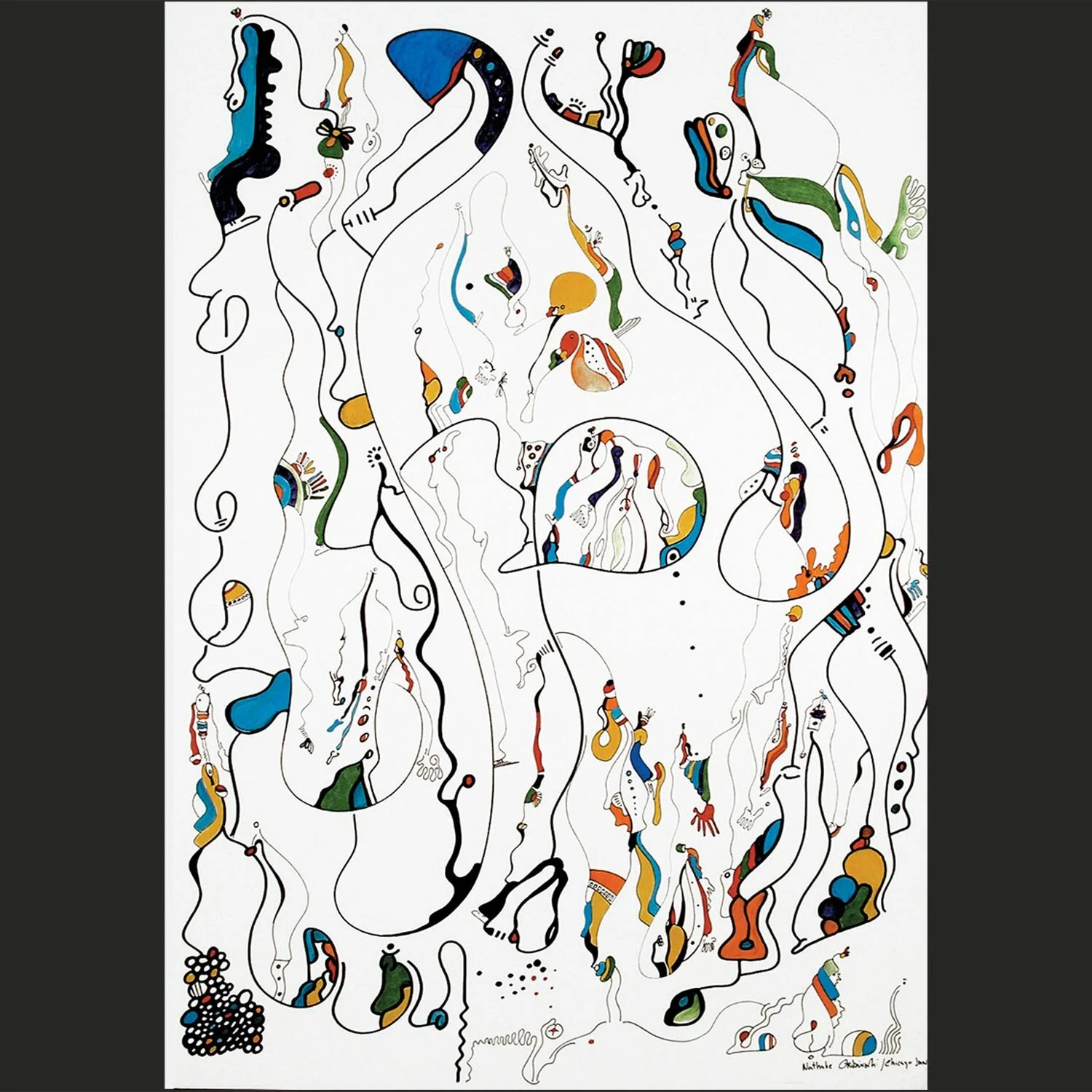
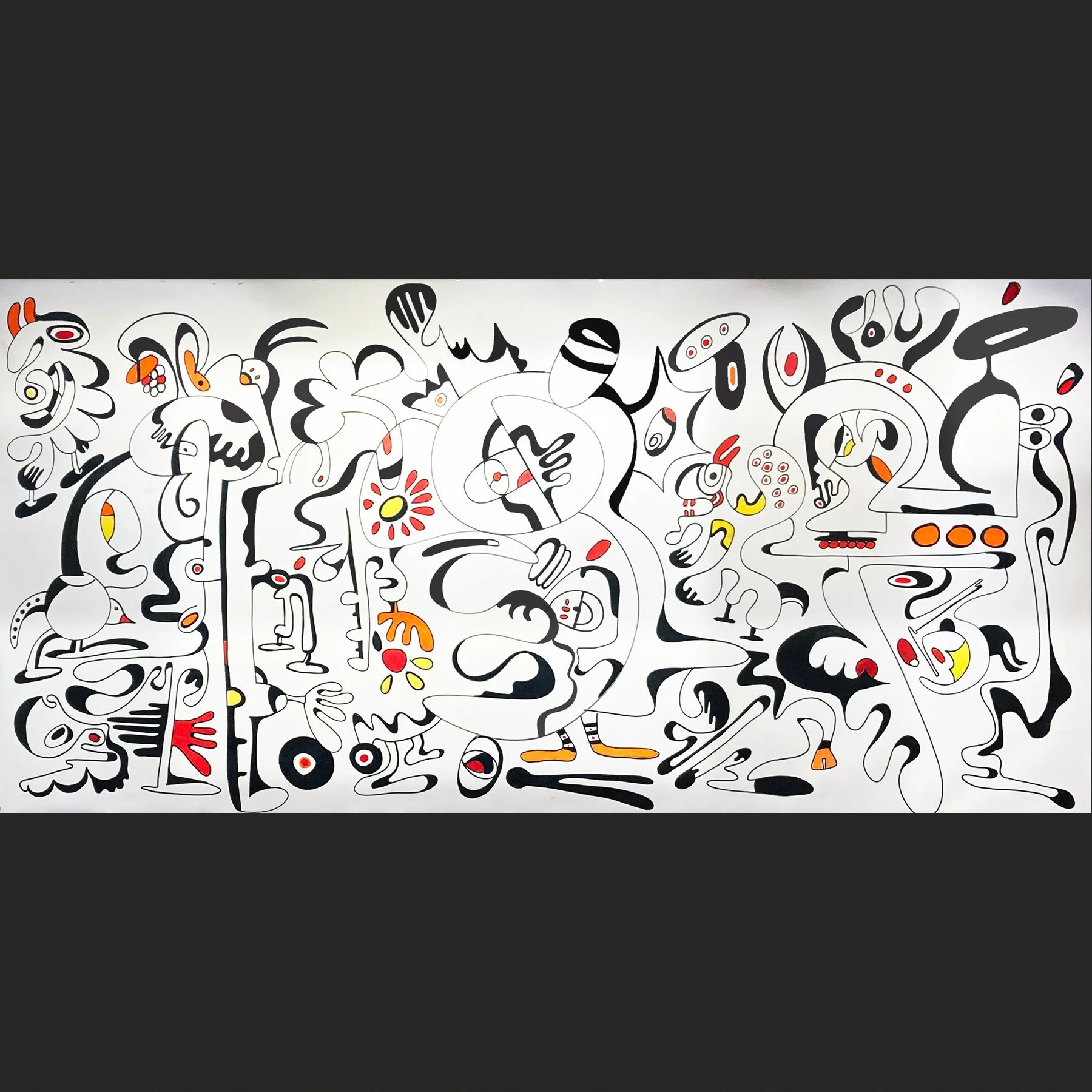
Long before the Tourlicoulis became a universe of paintings, it began as an instinct.
I drew these ink sketches everywhere—during lunch breaks at my graphic design job, in cafés and restaurants while waiting for a meal,
on phone books, scraps of paper, notebooks, and whatever happened to be within reach. I wasn't trying to invent a language.
I was simply following a gesture that kept returning.
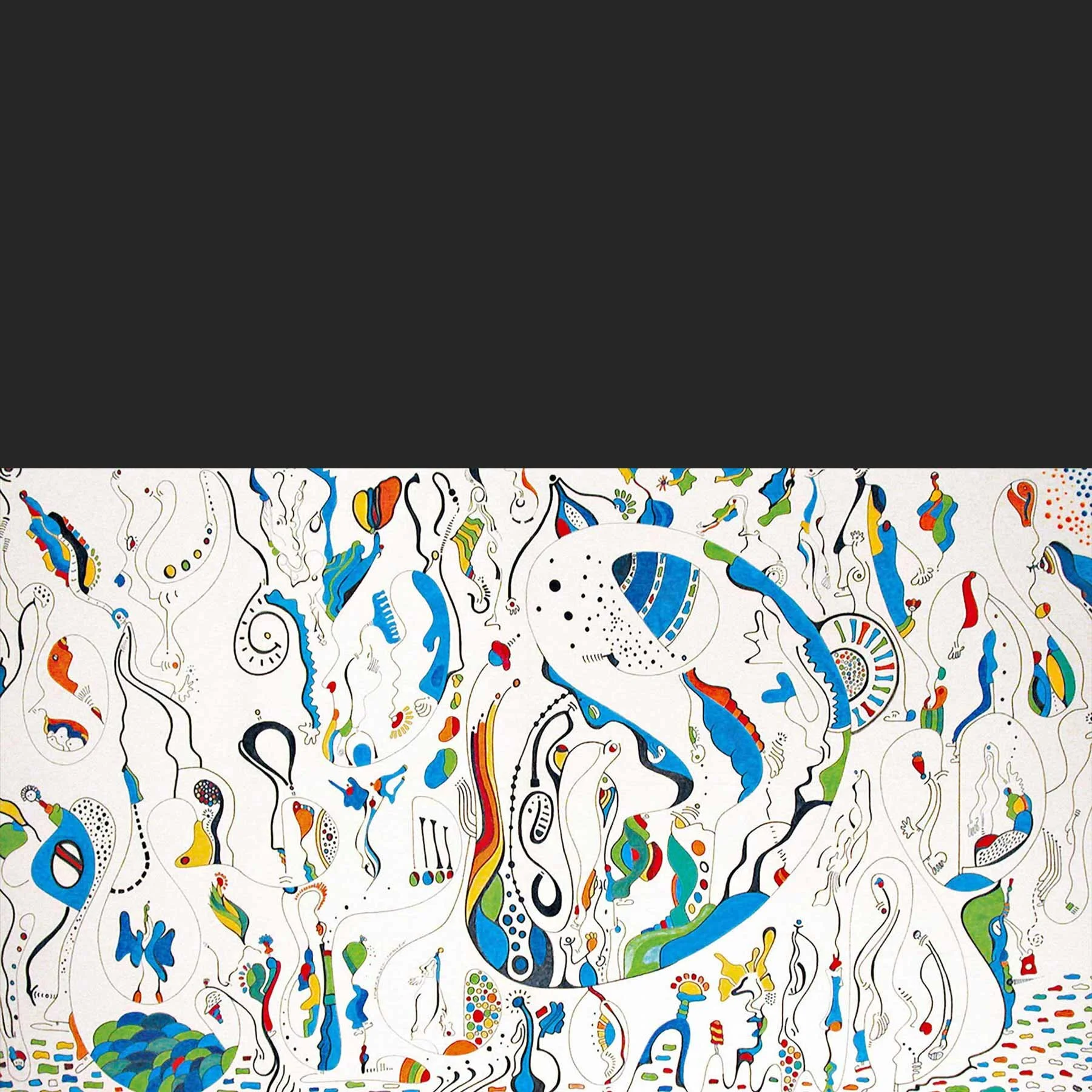
Over time, those spontaneous drawings revealed their own vocabulary: flowing lines, playful figures,
unexpected transformations, and visual conversations between forms. Looking back, I realized they were all speaking the same language.
These drawings are the earliest traces of the Tourlicoulis.
Together, they form the foundation from which the entire universe would later emerge.
More
More








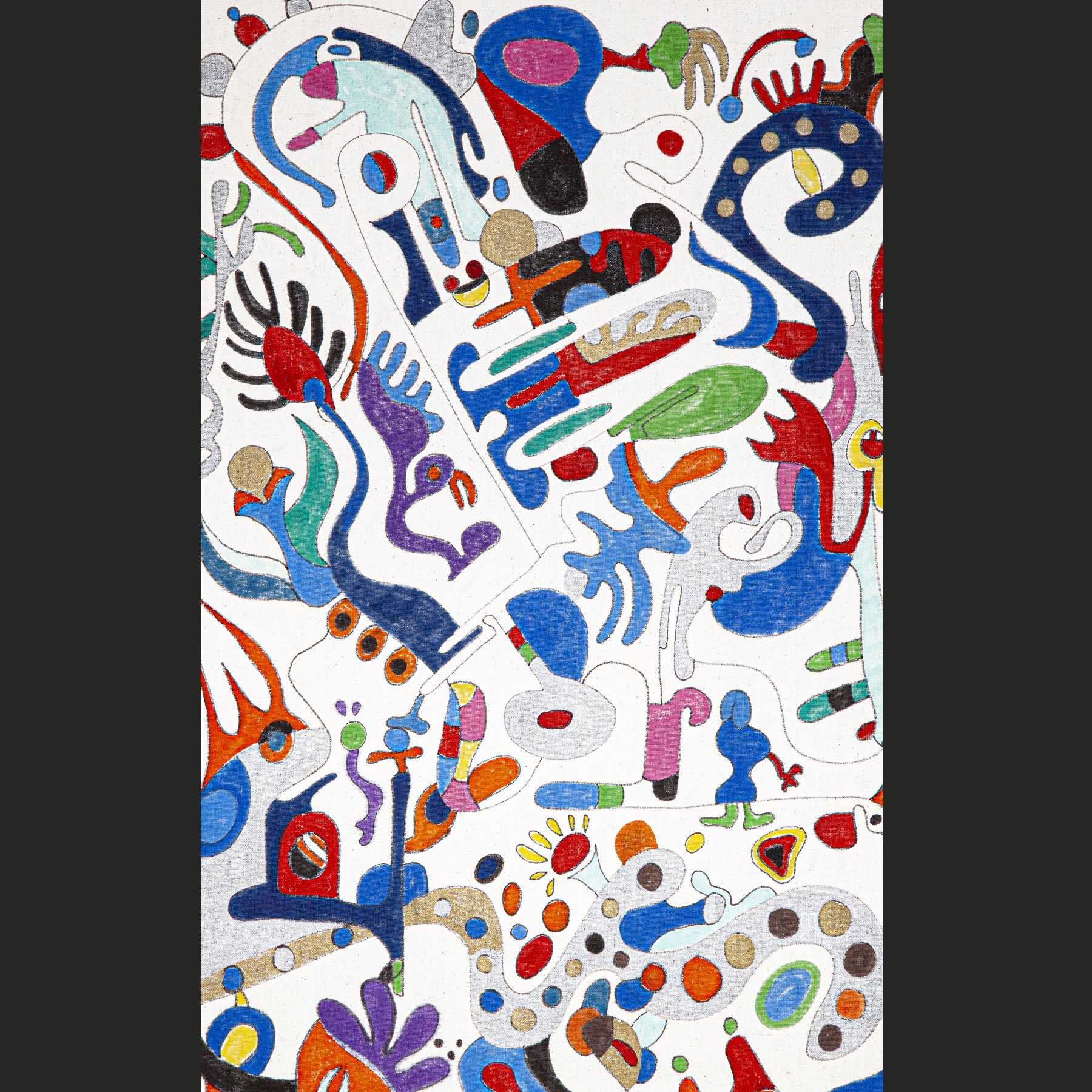
Post-Tourlicoulis
The language becomes more essential
2021-2022
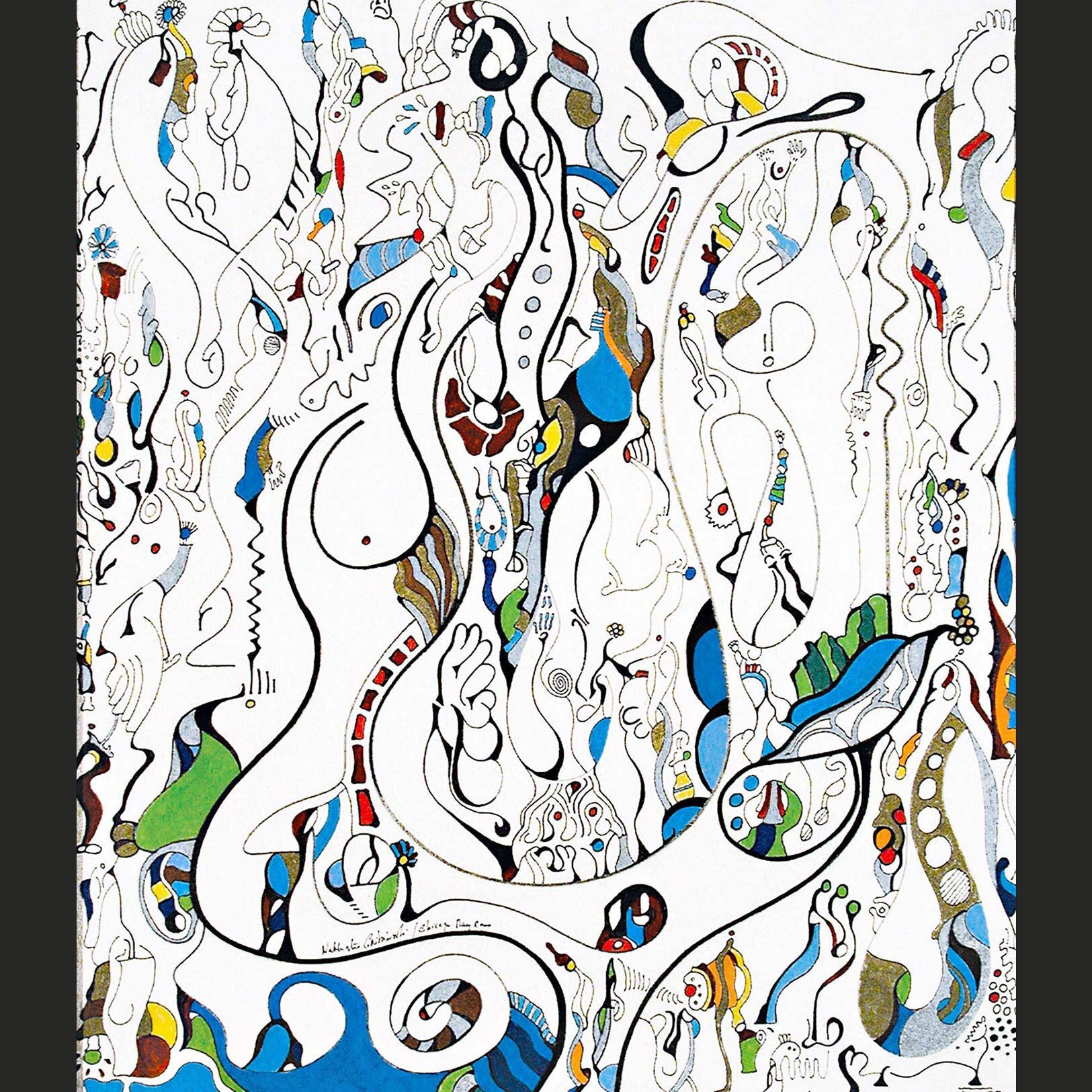
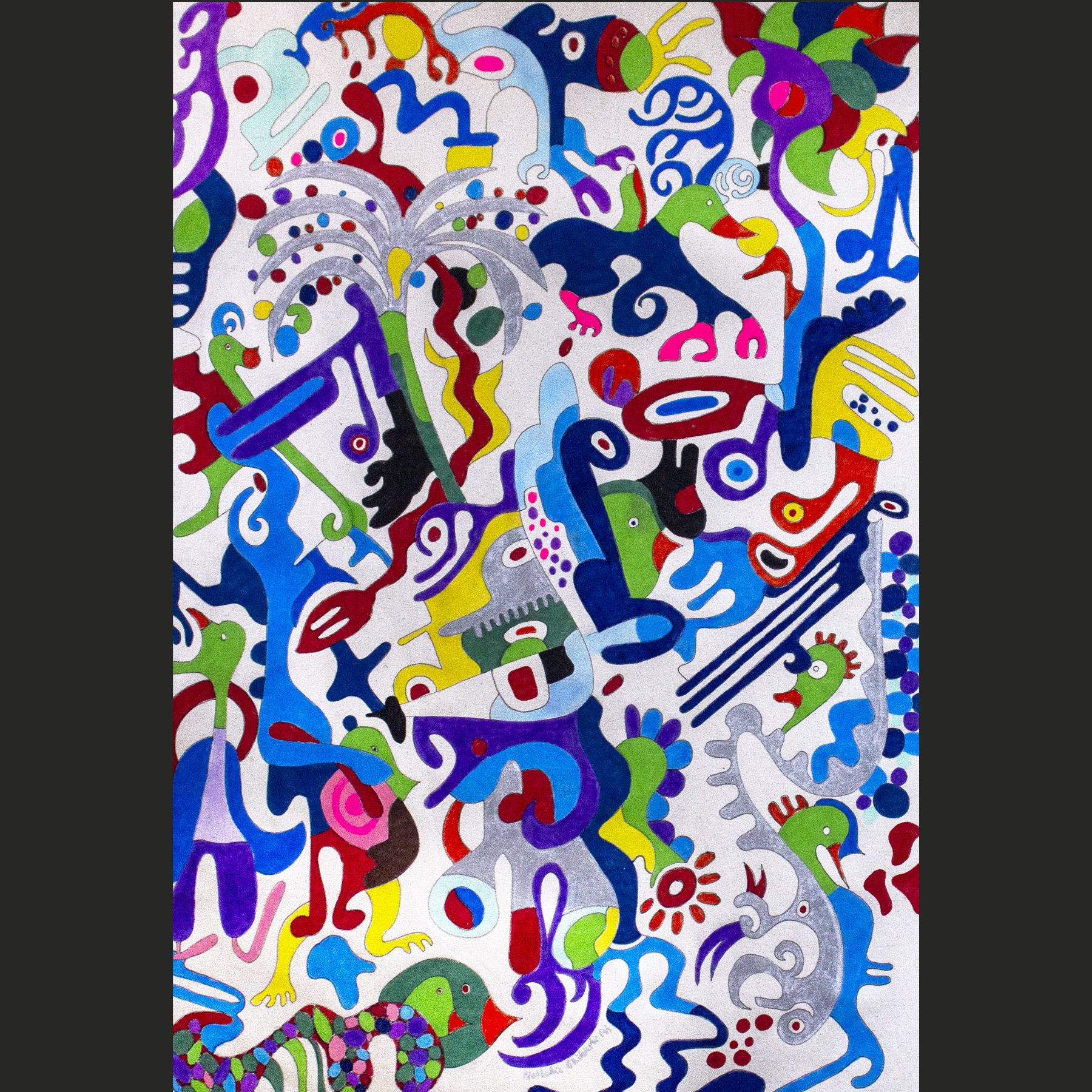
As the Tourlicoulis language evolved, it became more open and more essential.
The dense network of lines gradually gave way to freer forms, allowing colors, shapes, and individual characters to breathe.
Although its visual expression changed, its spirit remained the same: a language of curiosity, play, movement, and human connection.
The Post-Tourlicoulis series marks a new chapter in the evolution of the Tourlicoulis Universe, where simplicity creates space for deeper dialogue.
More






Tourli-Blue
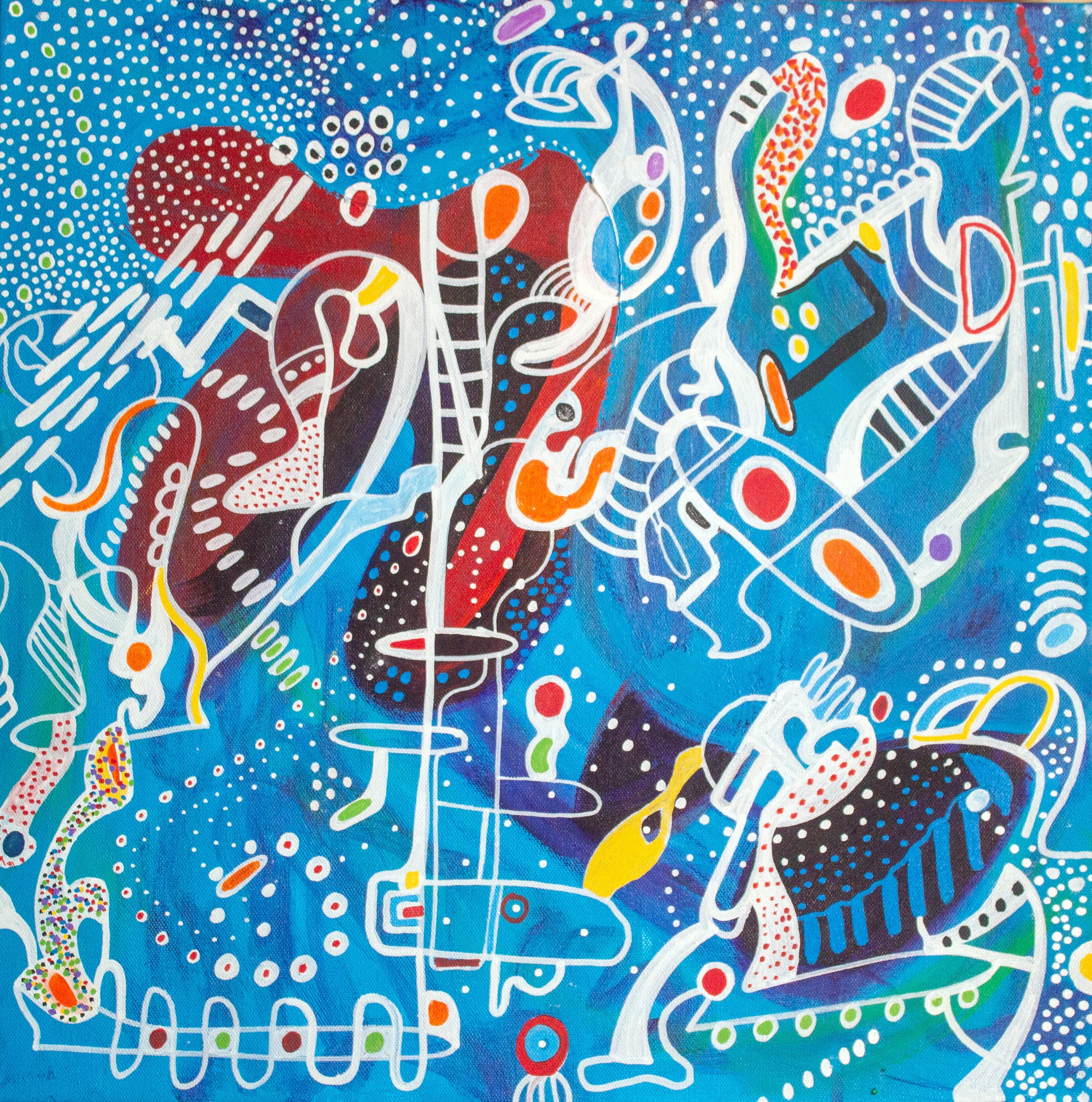
An underwater chapter
2010
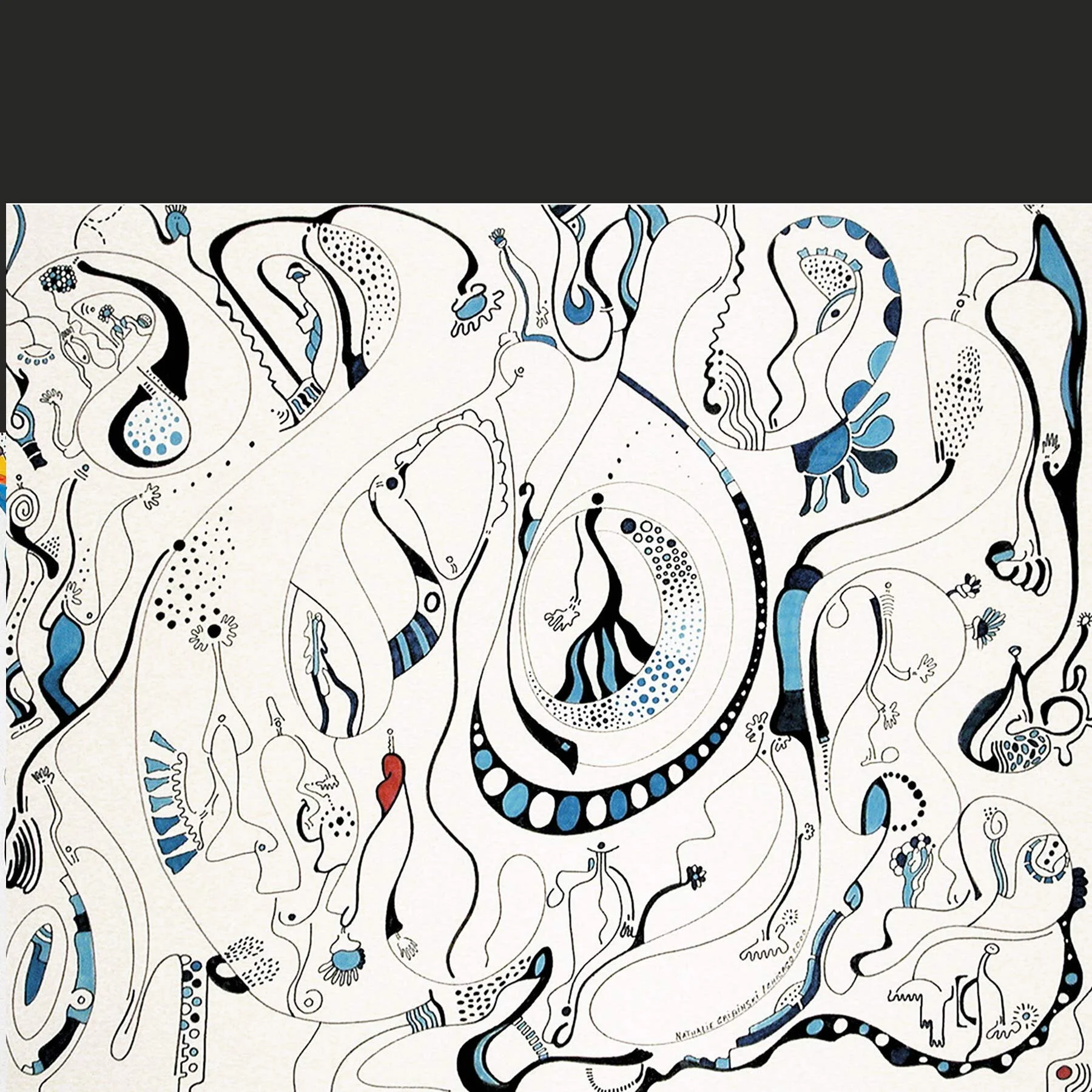
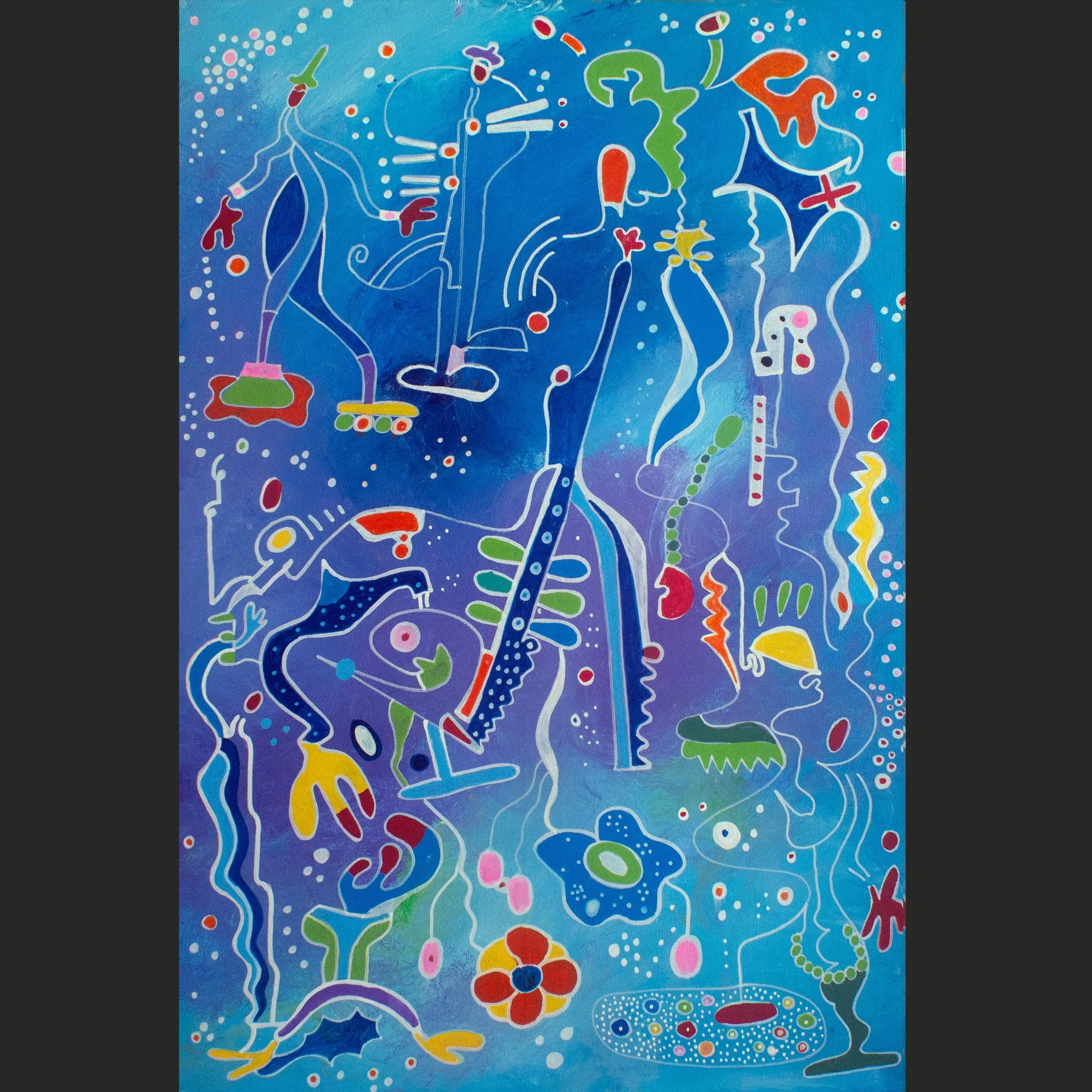
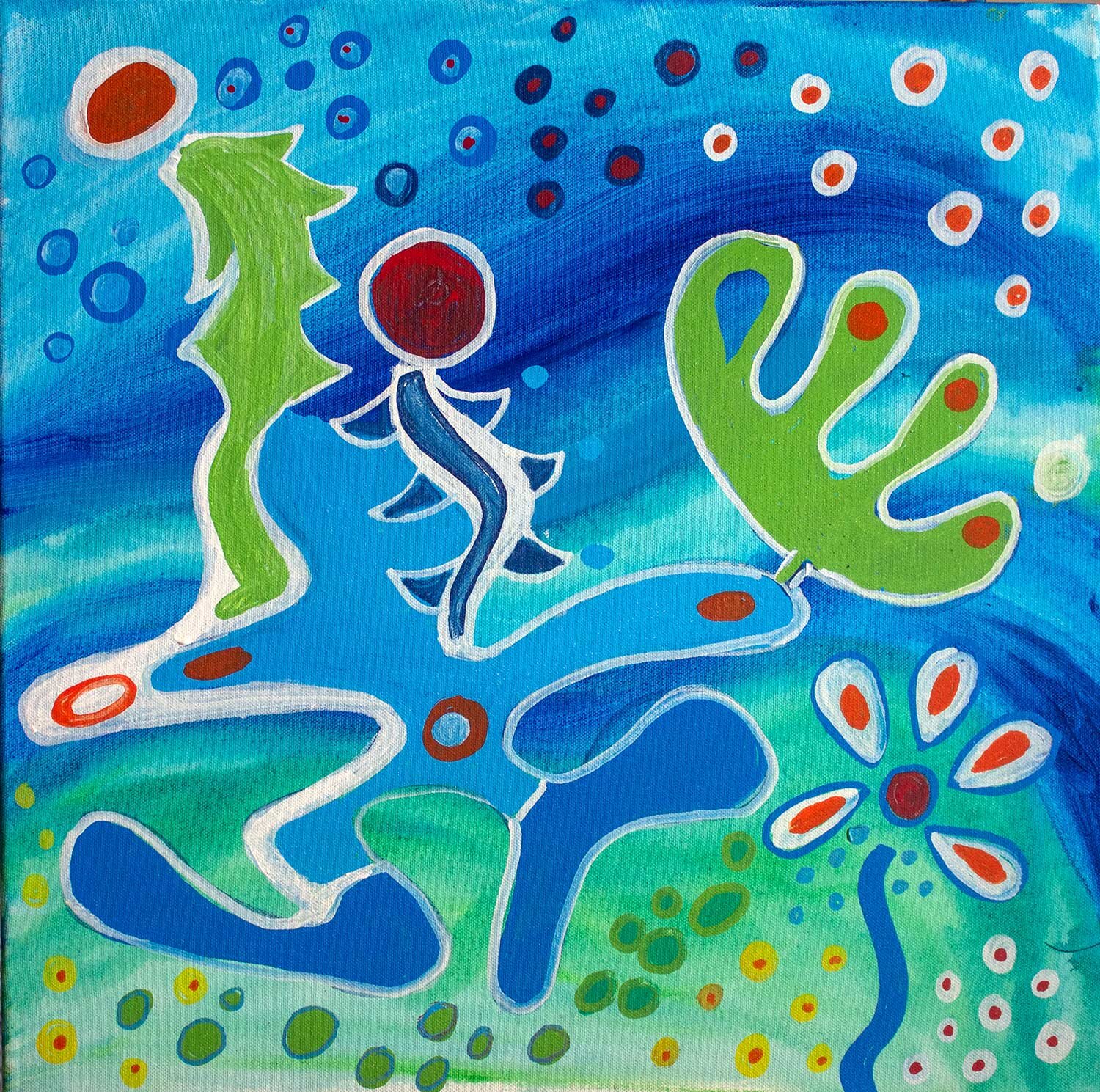
The Tourli-Blue series explores the Tourlicoulis language through a world of blue. Inspired by the feeling of being underwater,
these paintings create a quieter atmosphere where forms drift, connect, and move with gentle rhythm.
While the palette changes, the spirit remains the same: curiosity, play, and the desire to communicate through a living visual language.
More


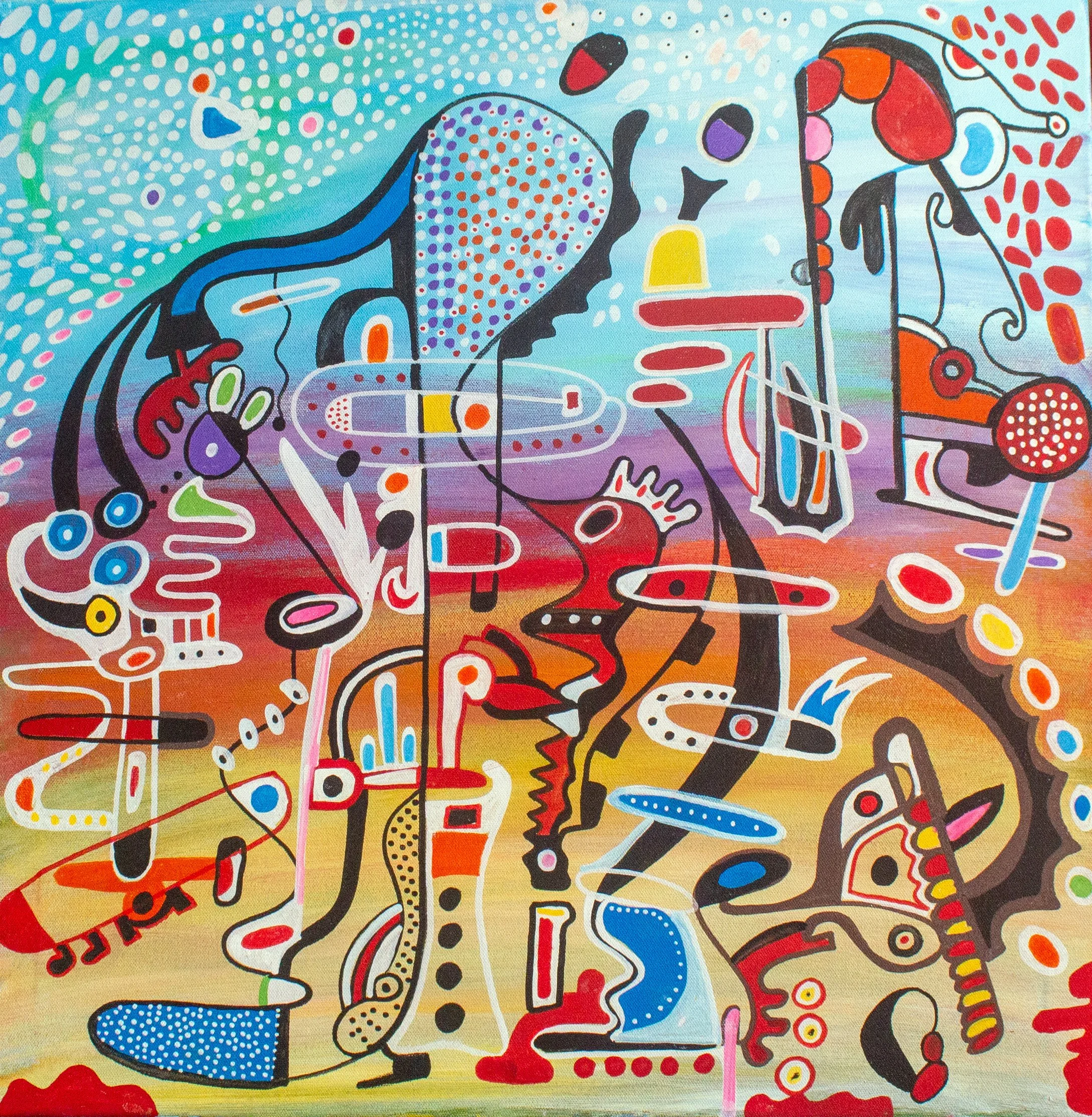
Tourli-Color
Color as a language of emotion
2024-2026
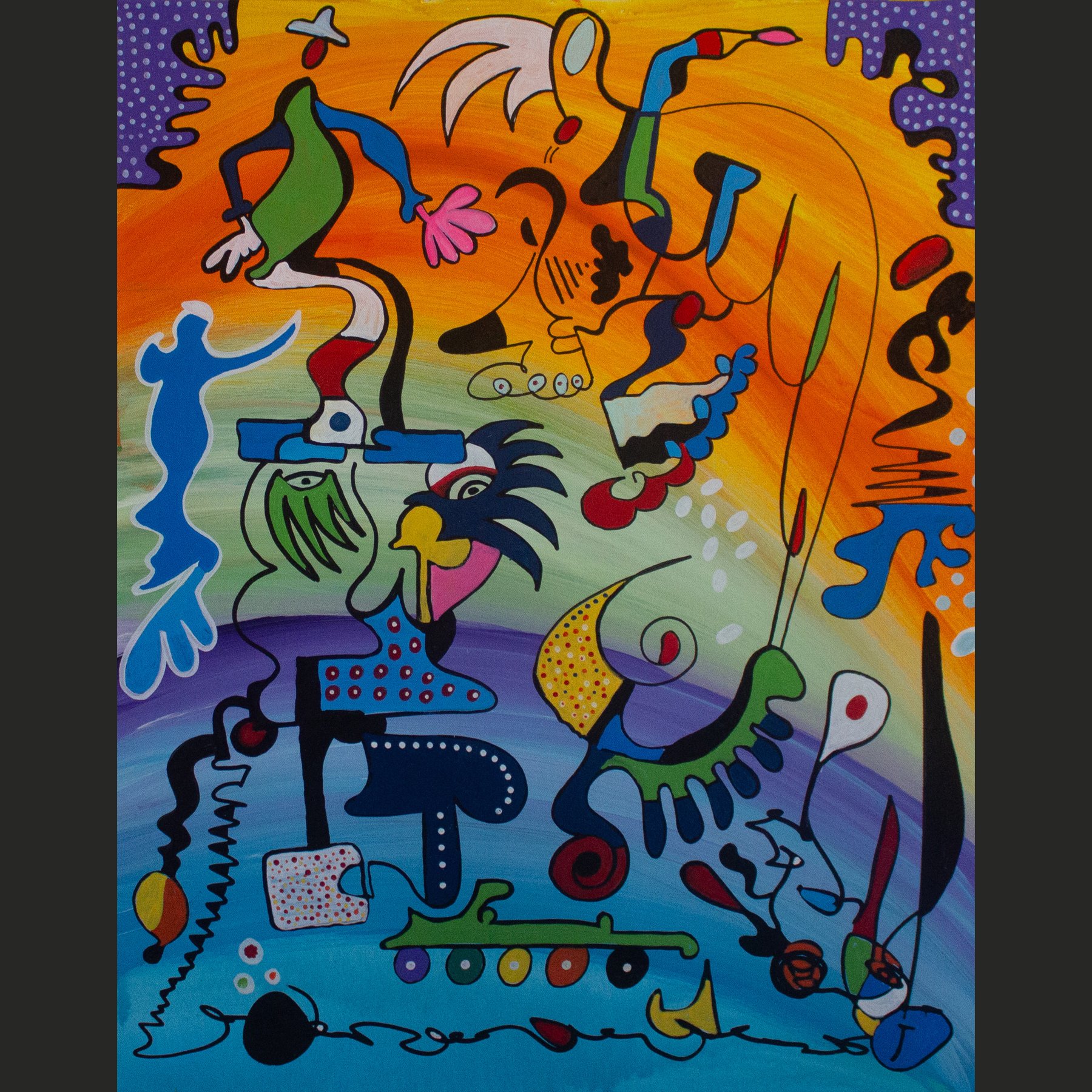
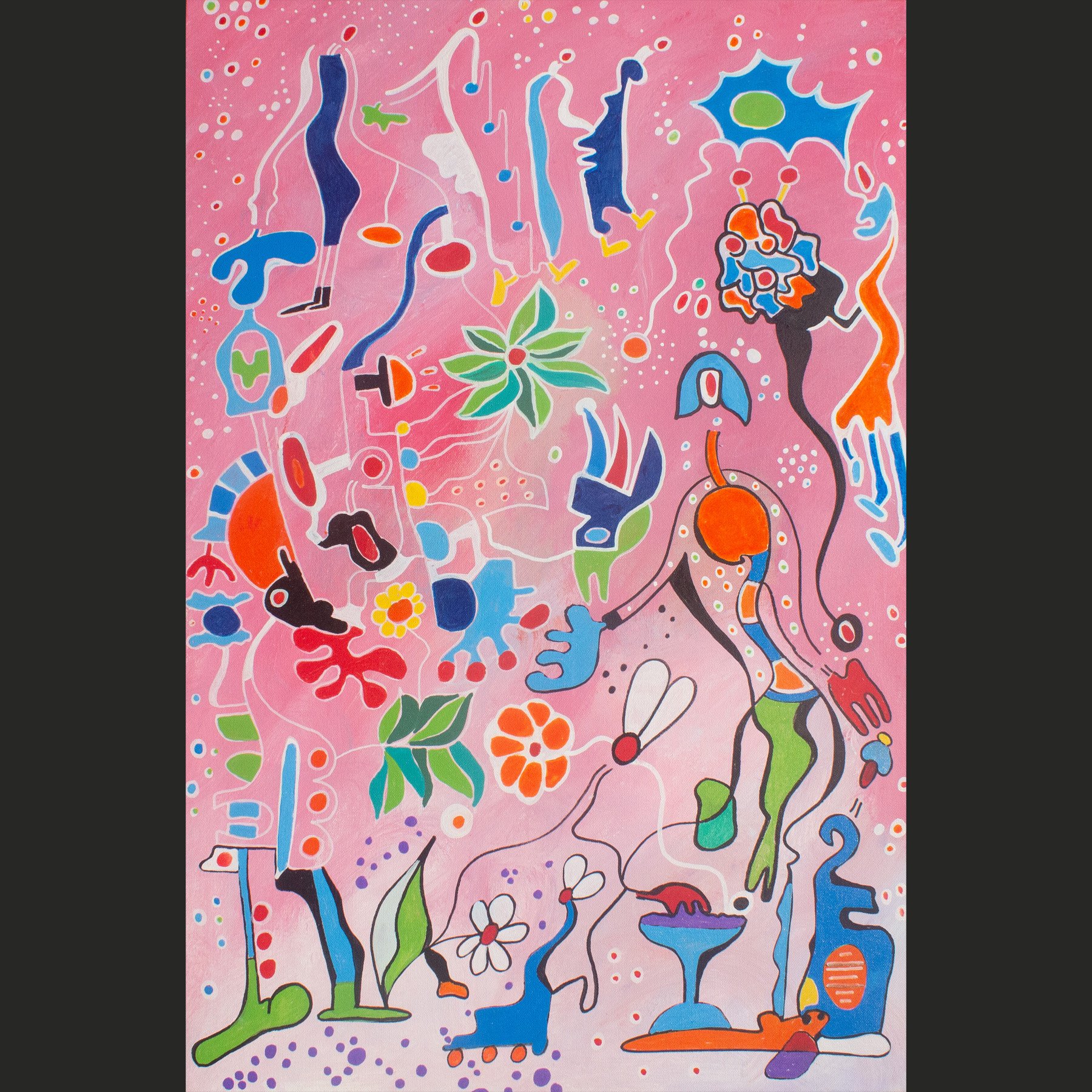
The Tourli-Color series celebrates color as a language of emotion.
Bright palettes, playful forms, and spontaneous movement create joyful conversations where imagination is free and connection
emerges through play. In these works, color is not only seen—it becomes a voice.
More











Tourli-People
Human relationships take center stage
2009-2015
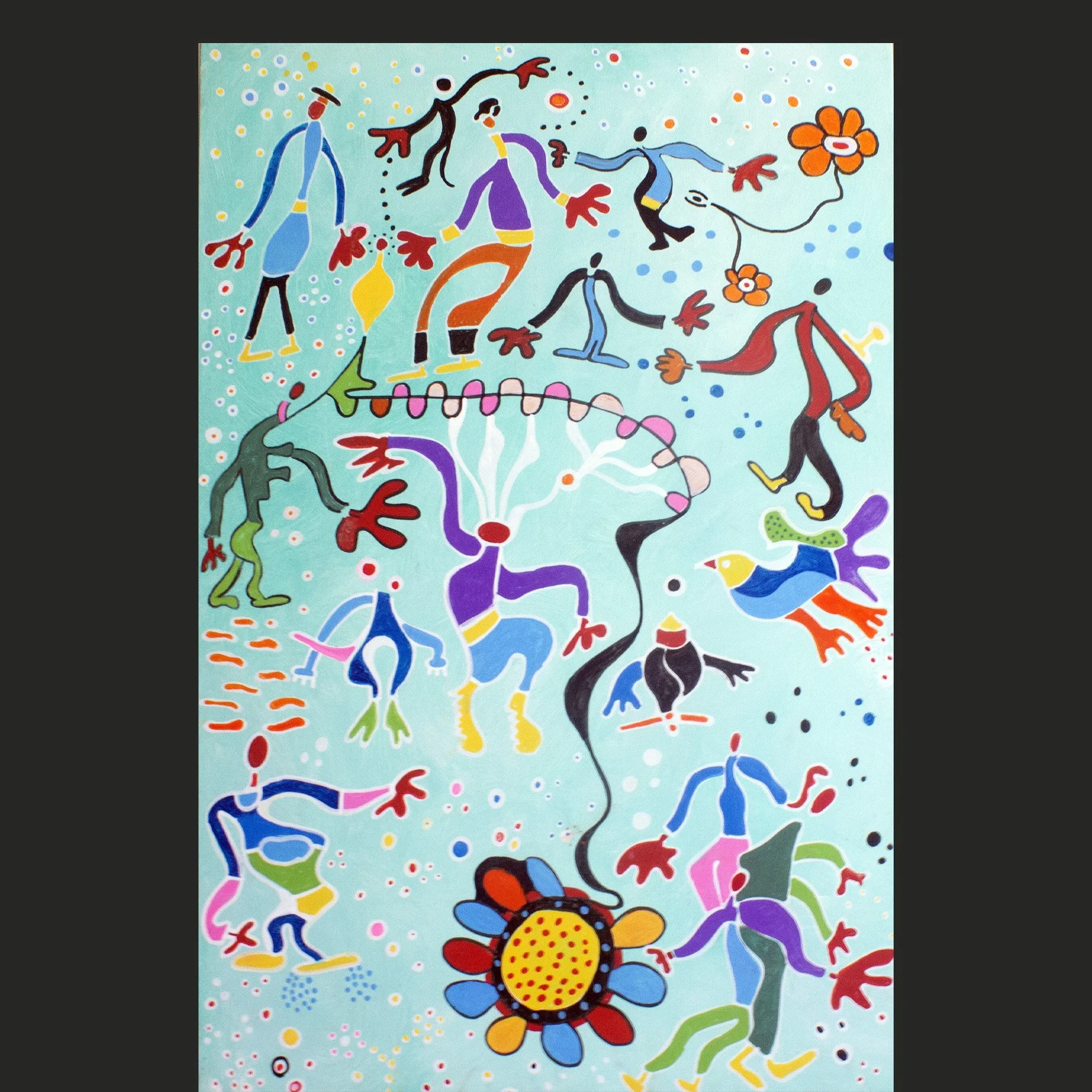
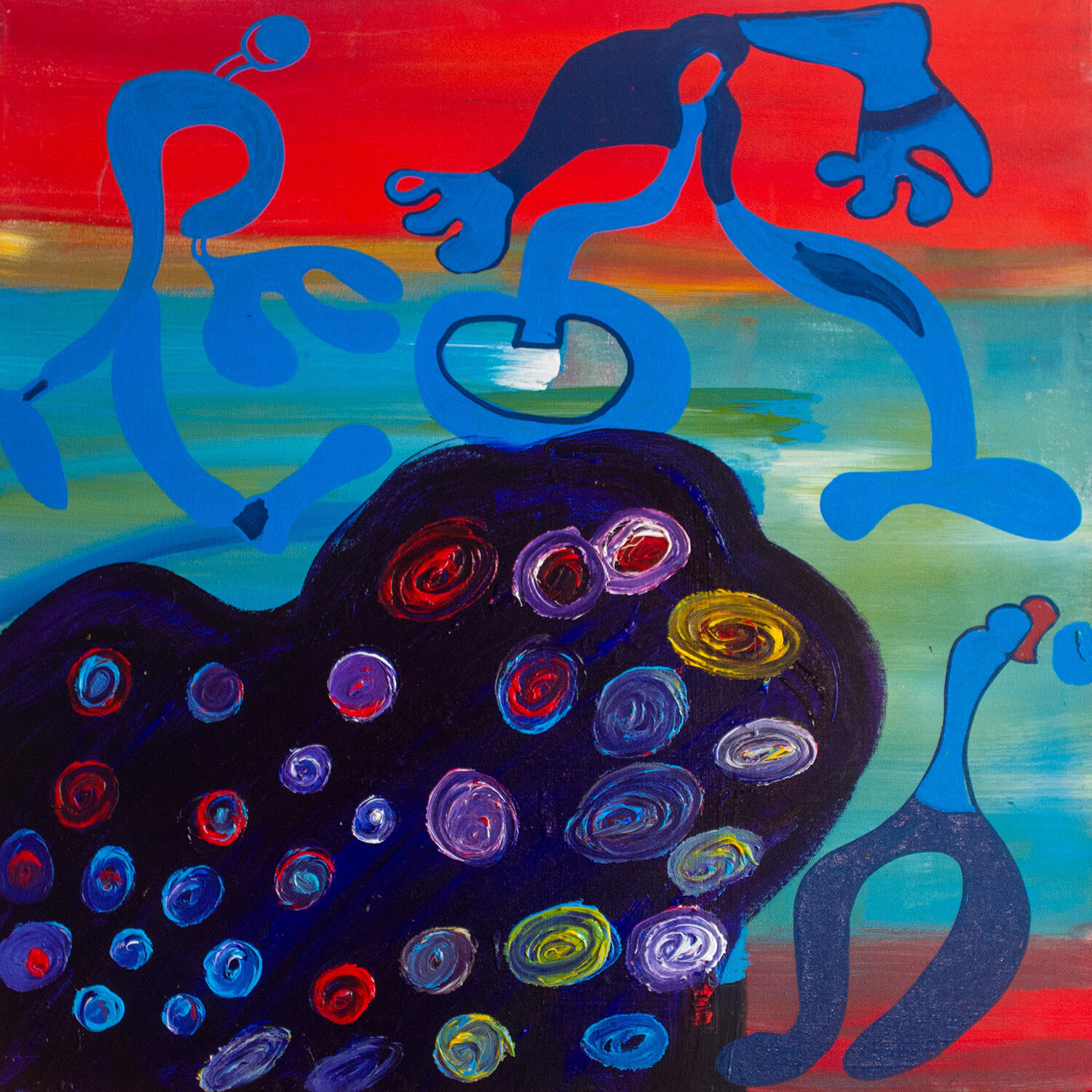
The Tourli-People series brings human relationships to the center of the Tourlicoulis Universe.
Figures, faces, and hands become larger and more expressive,
transforming the language of the Tourlicoulis into a more direct conversation about emotion, generosity, and connection.
Although the characters become more prominent, the spirit remains the same:
a living visual language where play, curiosity, and communication unite every painting.
More




Tourli-Space
Expanding into Imaginary Worlds
2021
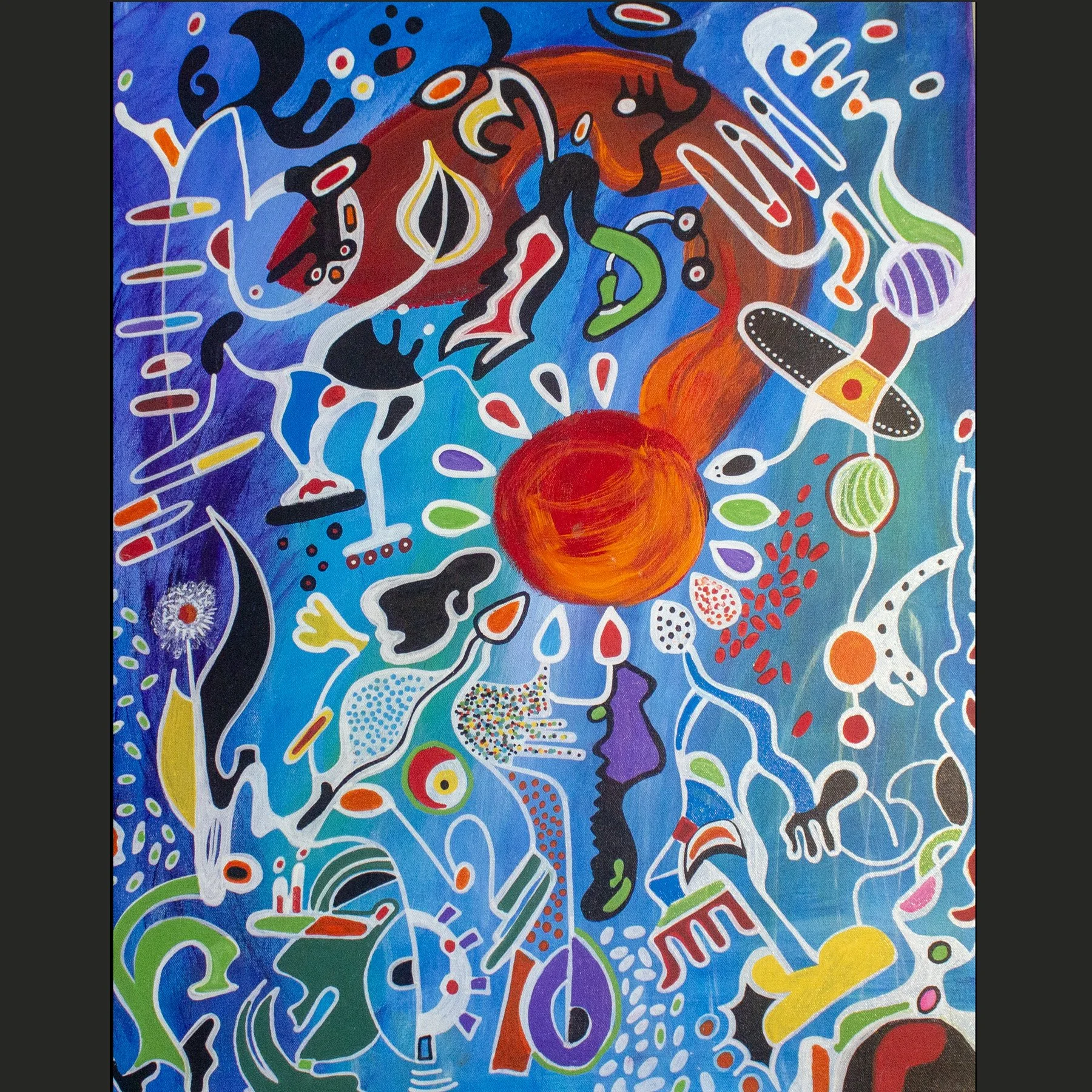
The Tourli-Space series expands the Tourlicoulis Universe into imaginary worlds where gravity disappears and imagination moves freely.
Floating forms, vibrant colors, and playful symbols create dreamlike spaces where everything is in motion and new relationships constantly emerge.
Although the landscapes become more cosmic, the language remains the same:
curiosity, play, and the desire to communicate through a living visual language.
More





Ink on paper
1999